Novel by Amanda Coplin
Set in Wenatchee. A backdrop of intense information about orchards as a way of showing relationships and self scrutiny. Written by a Pacific Northwest resident. Somehow vaguely disappointing. These are the trends of my summer reading. It amazes me how all of the books I've read have had one or more of these descriptors in common and yet all be so different.
"The Orchardist" is carefully written and introspective and features a male orchardist in Wenatchee. Based on that description, I could be talking about "Apples and Oranges," the memoir of a brother and sister, except that this book is set in the early 1900's, not 2001. It was written by a woman raised in Wenatchee, so the scenery is eerily familiar, much like "He's Gone" was written by a Seattle resident and totally nailed the population and mood of the city.
And yet, I didn't love it. That has been true of every book I've read since...May, maybe? I can't even remembered the last book I recommended. Yet this one was so highly recommended to me. I'm beginning to think the common denominator here is me. I'm getting to be a much harder to please reader. Is it because I'm writing, and therefore reading more analytically? Not that the books are bad, but just that I'm not allowing myself to enjoy them but thinking like a writer instead. That could be really really really really really really bad. I'd better find something I like and soon.
The next few up are an Isabel Allende, which usually rates super high with me, and the book that started the show "Call the Midwife." If they made it into a TV show, it has to be great, right? We'll see.
Love to read but too busy/lazy/tired/grumpy to leave the house? This book club's for you!
Monday, September 16, 2013
Friday, September 6, 2013
The Art of Hearing Heartbeats
Novel by Jan-Philipp Sendker
(Translated from German by Kevin Wiliarty)
I have talked to several people lately who have either too many or too few books to read. It's an interesting question for die-hard readers: where do you get your books? You know my usual suspects: my mom's house, library book club selections, recommendations from friends and family or even students, occasionally reviews in magazines and newspapers. But what about when your usual sources provide either too many, or worse, too few titles? It's a nerve racking predicament for the kind of people who would rather read the personal ads than nothing at all. My people.
I find myself in between the two situations, which isn't to say that I have just the right amount of books, Goldilocks-style. I have had a big stack of books to look forward to all summer, and as I've worked my way through them, more have appeared in my hands or my mailbox. And yet...not of them have been just right. To my friend who asked for a recommendation yesterday, I had to say I haven't loved a book for months now. And I'm sorry to say that this title doesn't break that streak. No love for "The Art."
I admit that I can't remember where I heard about this book, but I must have requested it from the library because it came in one of those beautiful purple fabric envelopes in the mail. It's actually a few years old, written in 2002 and translated in 2006. A young woman in New York travels to Burma (I had to look up where that is--bad social studies teacher!) to find her father who disappeared a few years before. She meets a mysterious monkish stranger in a tea house who says he has been waiting for her for years and tells her the story of her father's life in Burma from birth to age 20, including the woman he loved and left there. The story is beautifully told, almost mystical, and has a tropical post-colonial intensity about it. Right up until the end, though, I found it a little...boring, Maybe my attention has just been harder to grasp and hold throughout my pregnancy and now with a newborn at home, but I just haven't been swept off my feet lately.
What I liked about the ending is the prospect of long lost families reunited. It's a theme that appeals to me deeply for some reason (I'm not adopted, at least I'm pretty sure of it, so I don't know why it grabs me). I've loved that about Kate Morton's books and it's one of the themes of my own manuscripts. I just need a little more plot-driven story, ooh, and maybe an English manor or some elements of mystery thrown in.
So dear reader friends, where do you get your book recommendations? And what can you recommend for me that fits the aforementioned qualifications? Please comment!
(Translated from German by Kevin Wiliarty)
I have talked to several people lately who have either too many or too few books to read. It's an interesting question for die-hard readers: where do you get your books? You know my usual suspects: my mom's house, library book club selections, recommendations from friends and family or even students, occasionally reviews in magazines and newspapers. But what about when your usual sources provide either too many, or worse, too few titles? It's a nerve racking predicament for the kind of people who would rather read the personal ads than nothing at all. My people.
I find myself in between the two situations, which isn't to say that I have just the right amount of books, Goldilocks-style. I have had a big stack of books to look forward to all summer, and as I've worked my way through them, more have appeared in my hands or my mailbox. And yet...not of them have been just right. To my friend who asked for a recommendation yesterday, I had to say I haven't loved a book for months now. And I'm sorry to say that this title doesn't break that streak. No love for "The Art."
I admit that I can't remember where I heard about this book, but I must have requested it from the library because it came in one of those beautiful purple fabric envelopes in the mail. It's actually a few years old, written in 2002 and translated in 2006. A young woman in New York travels to Burma (I had to look up where that is--bad social studies teacher!) to find her father who disappeared a few years before. She meets a mysterious monkish stranger in a tea house who says he has been waiting for her for years and tells her the story of her father's life in Burma from birth to age 20, including the woman he loved and left there. The story is beautifully told, almost mystical, and has a tropical post-colonial intensity about it. Right up until the end, though, I found it a little...boring, Maybe my attention has just been harder to grasp and hold throughout my pregnancy and now with a newborn at home, but I just haven't been swept off my feet lately.
What I liked about the ending is the prospect of long lost families reunited. It's a theme that appeals to me deeply for some reason (I'm not adopted, at least I'm pretty sure of it, so I don't know why it grabs me). I've loved that about Kate Morton's books and it's one of the themes of my own manuscripts. I just need a little more plot-driven story, ooh, and maybe an English manor or some elements of mystery thrown in.
So dear reader friends, where do you get your book recommendations? And what can you recommend for me that fits the aforementioned qualifications? Please comment!
Wednesday, September 4, 2013
A Four-In-One
Before you get all super impressed with me that I am writing a blog post just three and a half weeks after having a baby, let me tell you three things:
1) I have the easiest kids ever. Sorry. It's true. (At least until they hit six; then they get mouthy.)
2) I really love writing of any kind, and this is way easier than working on a novel.
3) This one-sided conversation will be one of the longest adult convos I've had in about a month.
And if you weren't super impressed with me...maybe you should be just a tiny bit.
So here goes, four books worth of what's been rattling around in my head.
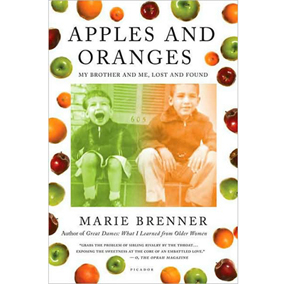
Apples and Oranges: My Brother and Me, Lost and Found
Memoir by Marie Brenner
I did a report on apples in elementary school. I learned about buds and branches and varieties and seasons, at a fourth grade level of understanding. This book is part continued apple research, part Psychology Today article, part family drama. The author is writing about her relationship with her brother after having been semi-estranged from him and then reuniting to help him as he fights cancer. They grew up in Texas, she lives in New York, and he lives in good old Wenatchee,Washington (my home town, FYI, in case I have any readers who aren't related to me). For me this book was a little dichotomous. There are too many story lines as she jumps around in their family history, her time in their three homes and on trips together, and in her feelings about her strange brother. She's also fairly critical of Wenatchee, over-using the words "apple country" and emphasizing the cheesiness of the hotel wall paper and frumpiness of the women's clothing. Interesting story but not my favorite memoir by far.
The Island
Novel by Elin Hilderbrand
This is the book I was waiting for. Two months ago. This would have been PERFECT to read while on vacation at the lake. It was pure pulp. The characters are rich and skinny and they drink crisp cold white wines and their romances all work out, eventually. The story is simple: a fifty something mother takes her two twenty something daughters and her fifty something sister back to the remote island where they summered all their lives but haven't been in 15 years, hoping to reconnect after various personal tragedies. It's full of beautiful people with posh names and only semi-serious problems. I ate it up like the many bowls of ice cream I've consumed this summer. It's a total no brainer and boy, did I need that.
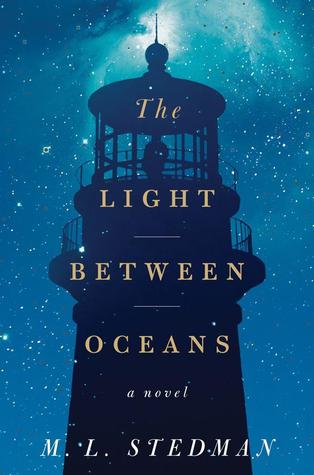
The Light Between Oceans
Novel by M.L. Stedman
I thought this was going to be a metaphorical light, and in many ways it is, but it's also an actual, physical light house. In Australia. Just after World War I. The lighthouse keeper and his wife steal a baby (no plot spoiler there, it says so on the back cover) when a rowboat washes up on their tiny island, containing the baby and a dead man. The story tells their sweet and heartbreaking background, and the sweet and heartbreaking aftermath of the baby stealing. It has beautiful imagery and an engaging plot, but I thought it was a little slow moving at times. I'm just glad it wasn't called "The Lighthouse Keeper's Wife." Enough with the wife stories.
Tiny Beautiful Things: Advice on Life and Love from Dear Sugar
Compilation of Advice Letters by Cheryl Strayed
I have to admit I only read about a third of this book. It's a collection of advice columns, which sounds horrible but is really kind of fantastic because of the author. Cheryl Strayed wrote "Wild: Lost and Found on the Pacific Crest Trail" which I discussed here. Strayed writes the advice column for therumpus.net, a website by writers, and she brings her own distinct flavor to her advice. She is both tender and hard, saying essentially "Sorry, sweetie, but you need to just do what you know you need to do" to most of the advice seekers. And she adds her own vignettes to most of her advice, making it real and poignant. So why didn't I finish reading it? Well, the stories of the advice seekers were just so sad. And also, it gets a little old, reading small segments of an online magazine over and over. It's why I don't like short stories--they're just too darn short.
Next up, I'm almost done with "The Art of Hearing Heartbeats" by Jan-Philipp Sendker. It's intense; in book karma, it makes up for my gobbling up a pulpy beach read and quitting on another book and reading "The Monster Returns" to my two year old five times in one night (true story).
1) I have the easiest kids ever. Sorry. It's true. (At least until they hit six; then they get mouthy.)
2) I really love writing of any kind, and this is way easier than working on a novel.
3) This one-sided conversation will be one of the longest adult convos I've had in about a month.
And if you weren't super impressed with me...maybe you should be just a tiny bit.
So here goes, four books worth of what's been rattling around in my head.
Apples and Oranges: My Brother and Me, Lost and Found
Memoir by Marie Brenner
I did a report on apples in elementary school. I learned about buds and branches and varieties and seasons, at a fourth grade level of understanding. This book is part continued apple research, part Psychology Today article, part family drama. The author is writing about her relationship with her brother after having been semi-estranged from him and then reuniting to help him as he fights cancer. They grew up in Texas, she lives in New York, and he lives in good old Wenatchee,Washington (my home town, FYI, in case I have any readers who aren't related to me). For me this book was a little dichotomous. There are too many story lines as she jumps around in their family history, her time in their three homes and on trips together, and in her feelings about her strange brother. She's also fairly critical of Wenatchee, over-using the words "apple country" and emphasizing the cheesiness of the hotel wall paper and frumpiness of the women's clothing. Interesting story but not my favorite memoir by far.
The Island
Novel by Elin Hilderbrand
This is the book I was waiting for. Two months ago. This would have been PERFECT to read while on vacation at the lake. It was pure pulp. The characters are rich and skinny and they drink crisp cold white wines and their romances all work out, eventually. The story is simple: a fifty something mother takes her two twenty something daughters and her fifty something sister back to the remote island where they summered all their lives but haven't been in 15 years, hoping to reconnect after various personal tragedies. It's full of beautiful people with posh names and only semi-serious problems. I ate it up like the many bowls of ice cream I've consumed this summer. It's a total no brainer and boy, did I need that.
The Light Between Oceans
Novel by M.L. Stedman
I thought this was going to be a metaphorical light, and in many ways it is, but it's also an actual, physical light house. In Australia. Just after World War I. The lighthouse keeper and his wife steal a baby (no plot spoiler there, it says so on the back cover) when a rowboat washes up on their tiny island, containing the baby and a dead man. The story tells their sweet and heartbreaking background, and the sweet and heartbreaking aftermath of the baby stealing. It has beautiful imagery and an engaging plot, but I thought it was a little slow moving at times. I'm just glad it wasn't called "The Lighthouse Keeper's Wife." Enough with the wife stories.
Tiny Beautiful Things: Advice on Life and Love from Dear Sugar
Compilation of Advice Letters by Cheryl Strayed
I have to admit I only read about a third of this book. It's a collection of advice columns, which sounds horrible but is really kind of fantastic because of the author. Cheryl Strayed wrote "Wild: Lost and Found on the Pacific Crest Trail" which I discussed here. Strayed writes the advice column for therumpus.net, a website by writers, and she brings her own distinct flavor to her advice. She is both tender and hard, saying essentially "Sorry, sweetie, but you need to just do what you know you need to do" to most of the advice seekers. And she adds her own vignettes to most of her advice, making it real and poignant. So why didn't I finish reading it? Well, the stories of the advice seekers were just so sad. And also, it gets a little old, reading small segments of an online magazine over and over. It's why I don't like short stories--they're just too darn short.
Next up, I'm almost done with "The Art of Hearing Heartbeats" by Jan-Philipp Sendker. It's intense; in book karma, it makes up for my gobbling up a pulpy beach read and quitting on another book and reading "The Monster Returns" to my two year old five times in one night (true story).
Thursday, August 8, 2013
The Sinners and the Sea: The Untold Story of Noah's Wife
Biblical historical fiction
by Rebecca Kanner
I think I've mentioned before that genres seem to be getting both more and less specific. Knowing an incremental amount about publishing now, I think it has to do with the success and marketing of certain books. Here's a perfect example. I'm not sure if this book really qualifies even as historical fiction. I mean, it's the story of Noah's wife and so technically, it centers on a historical event and attributes fictional thoughts, motives, and dialogue to historical characters, but it's not as clear cut as, say, Ken Follett's Century Trilogy with dates and names and battles and such. On the other hand, adding the tagline biblical historical fiction is kind of making up a genre. Admittedly, I am the one calling it that, not the publishers, but it seems fitting and descriptive in that this book is very much like The Red Tent and I think tries to capitalize on that success.
All that said, I think it's a cool premise. Take an unnamed woman in a biblical story and make a whole novel about her.
It was hard not to compare to The Red Tent as I read and I don't think this is even close in quality of writing or story, but it was still compelling. Partway through the book I stopped and re-read Genesis Chapter 6 through whatever, about Noah and the flood, and realized his wife truly gets very little mention, as do his sons' wives, even though without them the point of the ark would be moot. The fleshing out of these women seems important after reading the biblical narrative, and while I didn't LOVE the characters like in TRT they are admirable and realistic. The women, that is. The men kind of suck.
And the same goes for the expansion of the story of the ark and flood and just plain biblical times. What gets a few chapters in the Bible is told in hundreds of pages here, so it's much more...fleshy. The dramatic and horrific sins of the people, the overzealous righteousness of Noah, the supposed giants living in the land and legends of them, the every day rigors of living in a tent and killing your own goats for meat. It's all there, sometimes in expected and what seems to me realistic and sometimes in unexpectedly dark or crass or just plain crazy descriptions and anecdotes. I didn't bother to read Kanner's acknowledgements at the end so I don't know how much research she did for the book and how much is imagination. I don't really care. It's her book and she can tell it how she wants, but man was some of that stuff crazy, like cannibalism and drunk children and fields of dead people.
The other part that was hard to separate from my mind as I read is a more postmodern reading of the Old Testament, truly paying attention to how wrathfully God is described and how it was apparently His will to kill everyone on Earth (or in the Middle East, depending on how literal you are reading). It's not the God I know and it's hard to understand. I had to remind myself that this was a fictional retelling and I can't really know what happened and that my faith is not based on only Old Testament crazy but New Testament love and redemption. Cause otherwise...yikes.
by Rebecca Kanner
I think I've mentioned before that genres seem to be getting both more and less specific. Knowing an incremental amount about publishing now, I think it has to do with the success and marketing of certain books. Here's a perfect example. I'm not sure if this book really qualifies even as historical fiction. I mean, it's the story of Noah's wife and so technically, it centers on a historical event and attributes fictional thoughts, motives, and dialogue to historical characters, but it's not as clear cut as, say, Ken Follett's Century Trilogy with dates and names and battles and such. On the other hand, adding the tagline biblical historical fiction is kind of making up a genre. Admittedly, I am the one calling it that, not the publishers, but it seems fitting and descriptive in that this book is very much like The Red Tent and I think tries to capitalize on that success.
All that said, I think it's a cool premise. Take an unnamed woman in a biblical story and make a whole novel about her.
It was hard not to compare to The Red Tent as I read and I don't think this is even close in quality of writing or story, but it was still compelling. Partway through the book I stopped and re-read Genesis Chapter 6 through whatever, about Noah and the flood, and realized his wife truly gets very little mention, as do his sons' wives, even though without them the point of the ark would be moot. The fleshing out of these women seems important after reading the biblical narrative, and while I didn't LOVE the characters like in TRT they are admirable and realistic. The women, that is. The men kind of suck.
And the same goes for the expansion of the story of the ark and flood and just plain biblical times. What gets a few chapters in the Bible is told in hundreds of pages here, so it's much more...fleshy. The dramatic and horrific sins of the people, the overzealous righteousness of Noah, the supposed giants living in the land and legends of them, the every day rigors of living in a tent and killing your own goats for meat. It's all there, sometimes in expected and what seems to me realistic and sometimes in unexpectedly dark or crass or just plain crazy descriptions and anecdotes. I didn't bother to read Kanner's acknowledgements at the end so I don't know how much research she did for the book and how much is imagination. I don't really care. It's her book and she can tell it how she wants, but man was some of that stuff crazy, like cannibalism and drunk children and fields of dead people.
The other part that was hard to separate from my mind as I read is a more postmodern reading of the Old Testament, truly paying attention to how wrathfully God is described and how it was apparently His will to kill everyone on Earth (or in the Middle East, depending on how literal you are reading). It's not the God I know and it's hard to understand. I had to remind myself that this was a fictional retelling and I can't really know what happened and that my faith is not based on only Old Testament crazy but New Testament love and redemption. Cause otherwise...yikes.
Monday, August 5, 2013
He's Gone
Novel by Deb Caletti

Have you ever been in a waiting room at the dentist or in line at the grocery store or any other place you thought you'd just be quietly alone and the person next to you suddenly tells you more about him or herself than you expected to hear? It's an odd moment, and for me it depends on my mood. Sometimes I feel it's touchingly human and other times I feel a little violated. Didn't want to know about your surgery or why you're mad at your spouse, but thanks.
That's my feelings about the narrator in this book.
When I first started reading, I liked how she seems so human, so clear on every day thoughts, like how you have to wash cereal bowls right away or they are the worst to scrape out later, and how drinking coffee alone in the morning is its own little a miracle.
Then the crazy came out.
Granted, the story is about a woman who wakes up to find her husband missing and has only hazy memories of coming home from a party the night before, so that's enough to make you feel crazy right along with her. But as she spends the rest of the book trying to find out what's happened to him, you get the story of their affair together, divorces from their first spouses, and rocky marriage since then, along with all her guilt and battered woman syndrome and self doubt. It's well written but intense. Not the easy read I thought it would be from the cover. I guess I should have read the title and back cover better. Or just not judge a book by its...you know.

Have you ever been in a waiting room at the dentist or in line at the grocery store or any other place you thought you'd just be quietly alone and the person next to you suddenly tells you more about him or herself than you expected to hear? It's an odd moment, and for me it depends on my mood. Sometimes I feel it's touchingly human and other times I feel a little violated. Didn't want to know about your surgery or why you're mad at your spouse, but thanks.
That's my feelings about the narrator in this book.
When I first started reading, I liked how she seems so human, so clear on every day thoughts, like how you have to wash cereal bowls right away or they are the worst to scrape out later, and how drinking coffee alone in the morning is its own little a miracle.
Then the crazy came out.
Granted, the story is about a woman who wakes up to find her husband missing and has only hazy memories of coming home from a party the night before, so that's enough to make you feel crazy right along with her. But as she spends the rest of the book trying to find out what's happened to him, you get the story of their affair together, divorces from their first spouses, and rocky marriage since then, along with all her guilt and battered woman syndrome and self doubt. It's well written but intense. Not the easy read I thought it would be from the cover. I guess I should have read the title and back cover better. Or just not judge a book by its...you know.
Saturday, August 3, 2013
Death Comes to Pemberley
Fan Fiction/Murder Mystery
by P.D. James
What do you think about fan fiction? I find that I'm usually a little dismayed. I read it because I want to re-enter a world that originally enchanted me, in this case Jane Austen's Pride and Prejudice. Once I'm there, though, no matter how good the writing or how close to my original vision of the characters the story stays, it's not the same. Duh, you say. It's not the same writer so it can't be the same. And I might even have the same problem with some sequels that ARE by the same writer. But still. Something lacks.
I have to admit, I have read seven, count them, SEVEN, fan fiction follow ups to Pride and Prejudice. It's one of my top all time favorite books, mini series, movies, love stories. I partially named my daughter after Elizabeth Bennett and would probably name our next child after Fitzwilliam Darcy if my husband would let me. The first three books I read comprised a very stately, Austen-worthy series from the point of view of Mr. Darcy during the same time period (Fitzwilliam Darcy, Gentleman by Pamela Aiden) and then another three that were much bawdier and followed up the story after the marriage (Pride and Prejudice Continues by Linda Berdoli), the third of which I reviewed here. I have yet to read Pride and Prejudice and Zombies, although my husband enjoyed it. Zombies scare me. Anyway, my view of this book may be tempered by the others, which I think I enjoyed more because they were more about Darcy and Elizabeth. This one is a murder mystery, plain and simple, in Austen's language.
All that said, I still chose to read this one over the NINE library books I have on my shelf right now. I just love Austen. The most satisfying part in this story was the ending, after you find out who the murderer is, as Elizabeth and Darcy are consoling each other and wrapping it all up. It gives the ending that Austen shorted us in the original P and P, the "Why did you think that?" and "I'm sorry I was such a bugger, but I loved you almost all along" conversation. The rest is just a plain murder mystery in Regency wrappings.
by P.D. James
What do you think about fan fiction? I find that I'm usually a little dismayed. I read it because I want to re-enter a world that originally enchanted me, in this case Jane Austen's Pride and Prejudice. Once I'm there, though, no matter how good the writing or how close to my original vision of the characters the story stays, it's not the same. Duh, you say. It's not the same writer so it can't be the same. And I might even have the same problem with some sequels that ARE by the same writer. But still. Something lacks.
I have to admit, I have read seven, count them, SEVEN, fan fiction follow ups to Pride and Prejudice. It's one of my top all time favorite books, mini series, movies, love stories. I partially named my daughter after Elizabeth Bennett and would probably name our next child after Fitzwilliam Darcy if my husband would let me. The first three books I read comprised a very stately, Austen-worthy series from the point of view of Mr. Darcy during the same time period (Fitzwilliam Darcy, Gentleman by Pamela Aiden) and then another three that were much bawdier and followed up the story after the marriage (Pride and Prejudice Continues by Linda Berdoli), the third of which I reviewed here. I have yet to read Pride and Prejudice and Zombies, although my husband enjoyed it. Zombies scare me. Anyway, my view of this book may be tempered by the others, which I think I enjoyed more because they were more about Darcy and Elizabeth. This one is a murder mystery, plain and simple, in Austen's language.
All that said, I still chose to read this one over the NINE library books I have on my shelf right now. I just love Austen. The most satisfying part in this story was the ending, after you find out who the murderer is, as Elizabeth and Darcy are consoling each other and wrapping it all up. It gives the ending that Austen shorted us in the original P and P, the "Why did you think that?" and "I'm sorry I was such a bugger, but I loved you almost all along" conversation. The rest is just a plain murder mystery in Regency wrappings.
Tuesday, July 23, 2013
The Third Son
Novel by Julie Wu
I'm glad I do this for free and don't really have to think of much to say about this book to reach a word quota and earn my money. Actually, the money would be nice. However, this book was boring and I'd have to dig pretty deep to find thoughts to share. Here's the minimum:
The cover is pretty. The title is catchy. The premise is good. Neglected third son of a Taiwanese government official meets pretty girl during World War II air raid and then struggles to find her again and make good in life. Specifically, he goes to school in America and struggles to succeed as a scientist of some kind that I still don't really understand.
I think what I didn't like was the writing style and lack of any plot other than what I already described. Basically, the blurb writer did an excellent job selling the book on the inside cover, but the attraction ended there for me. The main character is kind of whiny and never really learns to let go of wanting his parents' approval or to trust himself. And while I like learning about other cultures, I think the writer assumes the reader will know more than I do about Taiwanese culture, which is heavily influenced by both the Chinese and Japanese. And the science totally lost me. Sorry, Ms. Wu. I don't get it.
I'm glad I do this for free and don't really have to think of much to say about this book to reach a word quota and earn my money. Actually, the money would be nice. However, this book was boring and I'd have to dig pretty deep to find thoughts to share. Here's the minimum:
The cover is pretty. The title is catchy. The premise is good. Neglected third son of a Taiwanese government official meets pretty girl during World War II air raid and then struggles to find her again and make good in life. Specifically, he goes to school in America and struggles to succeed as a scientist of some kind that I still don't really understand.
I think what I didn't like was the writing style and lack of any plot other than what I already described. Basically, the blurb writer did an excellent job selling the book on the inside cover, but the attraction ended there for me. The main character is kind of whiny and never really learns to let go of wanting his parents' approval or to trust himself. And while I like learning about other cultures, I think the writer assumes the reader will know more than I do about Taiwanese culture, which is heavily influenced by both the Chinese and Japanese. And the science totally lost me. Sorry, Ms. Wu. I don't get it.
Subscribe to:
Posts (Atom)