Sunday, January 12, 2014

The All-Girls Filling Station's Last Reunion

Novel by Fannie Flagg

That's a mouthful, huh? Kind of like Fried Green Tomatoes at the Whistle Stop Cafe. That's Fannie Flagg's big hit turned movie and a good representative of her style. All her books are Southern charm, meets whimsical characters, seemingly silly plots with serious social issues and major twists at the end.

This one is no different.

And yet. I knew exactly what I was getting with a Fannie Flagg book, yet I went through a series of changing emotions while reading. At first, I felt like I was home. There was a sense of "aaahhhh" as I read the first few pages and remembered her way of creating characters who feel like neighbors (despite the fact that I'm about as far from a Southerner as you can get). The main character, Sookie Poole, is just looking forward to a quieter time in life after playing mother of the bride at four weddings in two years. She has a sweet husband, quirky friends and neighbors, and a hilariously overbearing mother, all of whom feel familiar, either as incarnations in Flagg's previous books or reminiscent of people I know and love. (Go ahead, guess which one you are.)

A few chapters in, though, the shift began. I became a little disillusioned and even frustrated with the writing. When Sookie finds out a secret about her family's past that changes how she views herself, she reflects on her life up to now and calls on several friends and family members to help her understand. Some of the internal and external conversations are just plain awkward. One section of dialogue has seven lines starting with "Oh" and another leans heavily on "Well." Those aren't characterization; it's multiple people repeating the same sentence starter. And it"s just one example of the ways the middle of the book feels clunky to me. I started to compare Flagg's writing to some of the more serious stuff I've read lately and it paled a little.

And yet. When I found myself staying up late to finish the book, I realized several things. For one, her secondary story line, the one that has to do with the title, is actually the main story line. Sookie finding out about her past is a way of humanizing the part of American history that Flagg wanted to write about, which includes World War II era sexual politics and what the cover blurb calls a little known spot in American history, the flying of planes by female pilots during the war. Also, I realized that the mystery of the book, which seems so simple I thought I had it solved early on, actually kept me guessing. Flagg drops clever little distracting details that made me think I had it but I was wrong all along. Finally, as I was crying at the end, I knew that Flagg's writing has its own kind of genius. It's not Jess Walters or Elizabeth Gilbert but it's a different kind of American classic. I fell asleep that night wanting to re-watch "A League of Their Own" and hearing patriotic music, yet praying fervently for my daughter to never know the sexual discrimination that has been part of our country's history since forever. All that from a simple Southern charm school kind of story. She's clever, that Fanny Flagg. Clever.

Monday, January 6, 2014

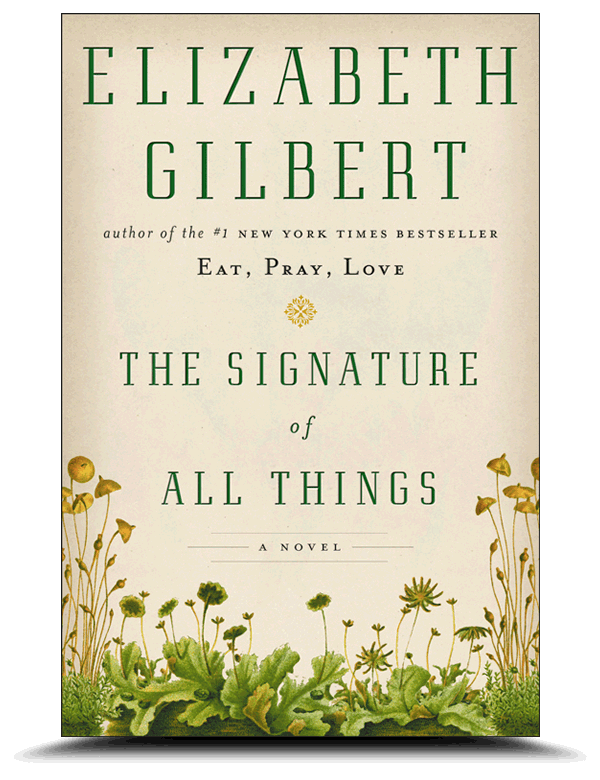
The Signature of All Things

Novel by Elizabeth Gilbert

I have to admit, I didn't want to like this book. You've heard of Elizabeth Gilbert, right? Of Eat, Pray, Love fame? I really enjoyed that memoir and thought that probably a fictional book by her wouldn't be as awesome. You can't do everything well, after all. And instead of being a good comrade in writing (as if I even compare to a best selling author), I kind of wished that she wouldn't do everything well. But apparently she does. This is a phenomenal book.

The plot and characters are refreshingly but deceptively simple: it follows the life of one woman from birth to death. Alma Whittaker is born in 1800 to an enormously successful and wealthy pharmaceuticals magnate. As a brilliant but physically unattractive child, she has a charmed early life with no friends but many interactions with adult geniuses and other interesting people. Her life is less enviable as she grows older and begins to lose the few people who are close to her. Never allowed or daring to leave her home in Philadelphia, the walls of her world begin to close in, so she turns to botanical research, which as always been at the heart of their home. Her research brings her joy and eventually more relationships and adventures in travel, some of them heartbreaking but all of them interesting.

Aside from publication jealousy, another reason I expected not to enjoy this book as much as I did is that it's so very much about science. Alma is a scientist above all else and there is a good bit of evolutionary theory that threatened to go over my head and interests. In writing about scientific research, Gilbert must have done a great deal of her own research, plus more about the customs, language and even philosophical and cultural leanings of the nearly 100 years and multiple settings in the book. Yet she manages to distill it down for the most part, writing at some times in generalities and when necessary in specifics that don't bore. Alma also dabbles in the gray area between the scientific and the spiritual, hence the title, which mixes things up enough to keep me interested.

Reading back on this post, it still sounds like a book I wouldn't enjoy. But truly, I did, and not just because I think I should. It has all my must-haves: likeable characters who snuck into myheart, a bit of suspense to keep me wondering and reading, the opportunity to live in another time and place for a short time. So congratulations, Elizabeth Gilbert. I guess I'll just have to like you and your sweet, wise face smiling from the book jacket. If only you could give me a hand in this publishing thing!

Sunday, December 15, 2013

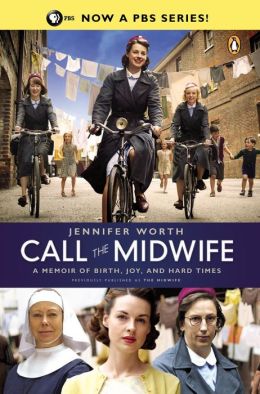
Call the Midwife

Memoir by Jennifer Worth

I should start getting a commission from Amazon. Because right now, I say to you, if you have Christmas gifts left to buy for anyone who can read and has a heart beating in his or her chest, go buy this book. Ohmygosh.

Set in 1950's London, specifically the East End or Docklands, it's the story of an upper middle class young woman who becomes a midwife at a convent. She's not a nun, which is interesting, but a nurse and midwife who assists the nuns as they serve the impoverished women of the area. Nurse Jenny Lee, as she's known at the time of her memoir, is surprised to find herself in a convent when she arrives at the door of her new job, and even more surprised by the variety of life in Docklands. She tells her story with both a sense of history and immediacy, from looking back on the changes in health care and midwifery, to generalizing about the way of the world at the present time, to telling with compassion the circumstances of the individuals right in front of her, which are so amazing you almost wouldn't believe them to be true. Her voice has a combination of naivete and world weariness that gives a sense of what life as a young woman and the world was like just after World War II.

If you haven't heard and can't read the tiny print on the cover image, this story has become a series on BBC/PBS. I actually began watching the show before I started the book, but was told that the book is pretty much covered in the first season. I immediately stopped watching because I hate to spoil a good book, but I'm not sure if I did spoil it or not. I had the actors' voices and faces in my head instead of my own imaginings. On the other hand, I now can look forward to reliving the parts I already read and seeing new stories as I watch the rest of the show. It's like getting an unexpected sequel.

Also speaking of tiny print, the subtitle is "A Memoir of Birth, Joy, and Hard Times." I think the reason this book so struck me is that this is life right now. It's the holidays, Christmas, the time of Christ's birth and families and supposedly joy joy joy. Yet it's so dark sometimes. Just reading any segment of news shows that the world is completely torn between darkness and light, desperately evil events like school shootings and heart-growing acts of love like football players befriending disabled students or people helping strangers buy their Christmas gifts. My life seems full of smaller versions of these ups and downs, too, with a beautiful but teething baby and the pleasure and loneliness of staying home with my children. It's comforting somehow to see this universal phenomenon mirrored in Jenny Lee's experiences with good people, bad people, poor people, generous people, birth, and death. Through the late nights and early mornings, the women she serves, and especially the nuns she serves alongside, she finds herself changing from scoffing at the faith of the nuns to yearning for their peace and love and eventually coming to her own faith. It's a good subtitle, and as nuanced as the story and its telling.

See? It's not just a story for women or BBC eggheads or whatever you might have thought. It's for all of us who need an excuse to smile and to cry and to gasp. Merry Christmas.

Friday, November 29, 2013

We Live in Water

Short Stories by Jess Walter

Does anyone really like short stories? I mean, besides grateful middle school students who are just glad they don't have to read a whole book. Everybody who I mentioned this book to so far has said, "Yeah, I don't really like short stories. They're just so________." Fill in the blank. For me, the blank is two things: short and dark. Wait, I'm criticizing short stories for being too short? That's a bit obvious. I should have known what I was getting myself into there. But what I mean is that they leave me unsatisfied. I just get into the characters, figure out the setting, and then bam, the story's over. I'm the opposite of middle school students in that regard, I guess. The other thing is that every short story that's been written for adults after about 1950 is required to be incredibly depressing. I think they're trying to be very real and human and all that but it's not my reality that there are no happy endings.

Jess Walter's book of stories doesn't change my mind about the genre one bit. He is, admittedly, a MASTERFUL writer. I am blown away by how simple his writing seems yet how incredibly well crafted, from the purity of the voices to the tightness of the pacing to the endings that manage to surprise every time. And YET. Every single story is about drugs, homelessness, crime, rape, dysfunction, or wait for it...zombie. Yes, there is even one zombie story and while it's a very smart zombie story, it's still about the one supernatural, not-real thing that terrifies me (thanks to a combination of the movie "28 Days Later," Halloween, and pregnancy hormones. I don't want to talk about it).

I do have to say that if Jess Walter was to read this blog, I think he would say that I missed the point. He'd say he was being intentional with all the druggie stories and even the zombie one, that he's showing the effect and character of the poverty and education problems in our culture and especially in Spokane, that he tried to elucidate that with a list of facts and anecdotes  (A LIST! I LOVED THAT PART!) he calls Statistical Abstract for My Hometown, Spokane, Washington. And I get it. I do. He humanizes a very deep cultural issue. I guess I just don't want my light reading to be about how society is failing. I get enough of that in my education books. So thanks, Mr. Walter. I'll read your next novel and skip the story collections.

Tuesday, November 26, 2013

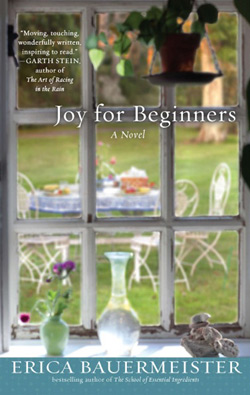
Joy for Beginners

Novel by Erica Bauermeister

It's sweater weather, folks. We're in the season of socks all the time, tea and coffee morning and afternoon (decaf, most of it), fight with the seven year old to get her to wear a coat every day. I'm sipping a vanilla cappuccino right now courtesy of my Keurig. And for many of us, this weather ushers in a new kind of reading material. It's the opposite of beach reads but with the same effect, like an eggnog latte versus a Frappuccino or a hot buttered rum over a daiquiri. Wait a minute...okay, I'm back. All the drink metaphors made me have to go to the bathroom.

So anyway, this book has a certain heart-warming quotient to it, where it's not too serious but touches on real life issues and relationships among a group of women of various ages, that makes it seem comforting and familiar. The beginning has a woman who has just overcome cancer and is celebrating with the circle of friends who have borne her through the disease and treatments. They encourage her to take a whitewater rafting trip with her college-age daughter to celebrate her victory, so she announces a challenge for each of them to undertake in the next year. The ages and walks of the women vary and so do their challenges, which the reader learns only in each woman's chapter. The voice telling the story remains impartial and consistent, so it's not too much of a bounce around to hear so many different stories. They each commit themselves bravely to their task and grow as expected but without too much sappiness or gift wrapped perfect endings.

And yet. Probably because I read this on the heels of a masterpiece (Beautiful Ruins by Jess Walter) or because I was surprised and delighted to stumble on this author's first book (The School of Essential Ingredients) there were parts of this one that fell a little flat for me. The descriptions are too neat and tidy and come off as sentimental and a little sappy. They remind me of so many of the personal memoirish blogs I read, or all the thankful Thanksgiving facebook posts going around right now. Sweet but somehow all sounding the same. The characters, too, were less rounded and more like caricatures than I hoped for. I also recognize that these are issues I'm having with revising my own beleaguered novel, so I'm reading too much with a critical writer's eye. This is a "quiet" story, as one agent described my manuscript, and I enjoyed it quietly, like a warm pair of socks.

Two parting thoughts (and a list to keep my soul happy):

1) Next on my bookshelf is Jess Walter's recent collection of short stories. I'm kind of hoping I don't like it, because I usually don't like short stories, but he knocked my warm socks off with his novel, so I have to give it a shot. Plus, it's overdue at the library and we know how crazy that makes me.

2) I am trying to fix the blog so you can comment (that would be so much fun! like a real book club, kinda sorta). So far I've tried Google's suggestions to no avail, so I'm going to ask my husband will take a look. My kids think he can fix anything.

Thursday, November 21, 2013

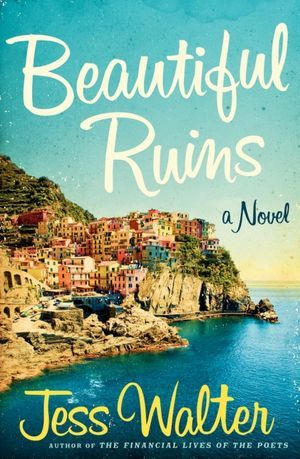
Beautiful Ruins

Novel by Jess Walters

Some thoughts, in no particular order:

1. I love reading Washington State authors. It makes them seem like normal people (I could have driven by his house!) and pulls me up out of the murky depths of trying to get published and being rejected for the 67th time. Jess Walter did it and he's from Spokane! Maybe I can, too!

2. No one knows what literary or commercial fiction really is. Not me (see the post in which I attempted to pin it down and failed), not publishers, not NPR. Cause this cover looks like commercial fiction, but the book is billed as literary fiction, but it's such an engaging read that it blows most contemporary literary fiction away. See what I mean?

3. I like starting my blog with lists. I like anything with lists, actually. And this book ends with a list! Really! A list of happy endings for various characters, both the expected and the unexpected. I hope that didn't ruin it for you, but it makes me feel better to know that it's all going to turn out okay. Which is very commercial fiction-ish, by the way.

4. I'm using a lot of exclamation points today. Sorry, sorry about that. I'll restrain myself.

Okay, here's the book in a nutshell...nope, can't do it. There is no nutshelling this book. Jess Walter wrote a TRULY sweeping story. It goes from 1960s Italy where the young owner of a small hotel hosts and helps a young American actress working on the set of "Cleopatra," to modern day Hollywood where a producer's assistant and would-be screenwriter are having early life crises, to World War II Italy, to the post-grunge music scene in the UK, to 1970s theater in Seattle, and back again. Sweeping. I was halfway in before I'd met all the main characters. And all these characters and settings blend not in a mixed up strangers sort of way but a completely natural telling of their lives. Walter makes the extraordinary seem ordinary and vice versa. His language is beautifully simple.

In fact, I think that besides the likeable characters, interesting settings, and surprising plot, this is what makes this book so excellent. The simplest scene is beautiful and important in both the smallest and biggest ways. There is a scene where the hotelier and actress go for a walk to see an old WWII pillbox bunker. A German soldier has painted portraits on the inside. It's a momentary distraction for the characters but as a reader you can sort of kind of start to tell the importance of the moment. And then we come back to it again. And again. In small ways all, but that's his style. Small becomes big, like these types of scenes, and yet the huge things (scandal! pregnancy! drugs! again with the exclamation points!) just fall in line and don't seem huge at all until you step back and see them.

Walter is such an excellent writer that I would be inordinately jealous, except that he confesses in the interview at the back that it took him 15 years to write this story. As I told a friend, I wasn't even an adult 15 years ago, so I'm okay with it.

I think my feelings are clear here: read this book. Everyone can love it, despite the literary label. High school students will probably be asked to write papers on it in 15 or 20 years and they'll hate it then, of course. I've also heard that some "real" book clubs are discussing this book, so for those two groups I'll leave you with some literary analysis that you are welcome to steal: one of the unifying elements of the book is how very human we all are in our constant striving for success. At one point a group of the characters are travelling to Seattle on a quest with many different purposes, though each of them is looking for some kind of fulfillment. Walter compares them to the Scarecrow and Tinman, who discovered on THEIR quest that the things they sought, they had all along. As they fly into the Emerald City, Walter uses imagery from "The Wizard of Oz." That's genius.

And it still has a happy ending.

Wednesday, November 6, 2013

Gone Girl

Novel by Gillian Flynn

Always a little late to the party on these uber popular books, aren't I? I think I have oppositional defiance disorder (ODD, that's a thing, much to the chagrin of school teachers everywhere) when it comes to current "it" books. I purposefully don't want to read it BECAUSE it's the book that everyone else is reading. Until I do.

I think with these books I also tend to tune out what the book is really about, beyond the premise, which is obvious from the title here. A woman disappears, clearly, and as usual her husband is the main suspect. But what I didn't know is that it's told from two perspectives, his and hers, and the timelines are different, his being the present day, the current disappearance and investigation, and hers being past, how they met and their first five years of marriage. And what I really didn't know is how completely mental it is. Like, get under your skin creepy crazy. I heard it was DARK, but wow. These people are nutso.

I have to give credit to the author. She must have read a ton of psychology books and then dove really deep into her own marriage and every other marriage she had ever witnessed up close in order to give this gut check analysis of a life lived together. The characters are incredibly detailed and rounded and you learn more about them than you know about yourself or your own close ones, which is incredible writing, but remember, crazy. And it made me a little crazy reading it. How much do you really want to know about other people, really? Even your own spouse or other loved ones? This is kind of the point of the book, that knowing someone so well is touted as true love and makes you soul mates, but it's eventually kind of disappointing. Or worse.

There. I've done my best to describe the satisfying creepiness without giving away any of the many plot twists. By the way, I saw that a movie version is due out next year. I'm not sure I'll see it. I mean, I don't think I want it to count as one of "my" movies when my husband and I take turns choosing what to rent because it will be somewhat violent and full of cringe-worthy swearing. I'm more of a feel good movie kind of girl. On the other hand, maybe it will be one of the rare movies we both like equally. We'll see.