Wednesday, December 16, 2015

Transparency

Today, my friends, I am really taking this book club seriously. I'm sometimes envious of the non-virtual book clubs. (Their hair is done nicely! They're out of the house! They're drinking wine from glasses with stems!) This book club is just as real as the pretty ones, though, because I think about you as I read. What will I say about this book? Do I like it? Do my friends like it? Where does this intersect with me? You deepen my reading and share the experience with me. Sometimes, however, I must admit that I hold back a little when I write to you. Sometimes I don't want to offend someone who recommended a book. Sometimes my thoughts aren't 100% shareable, with you or with the rest of the internet reading world. Tonight is different. I don't have any big secrets to reveal, just a commitment to write what I'm thinking, unfiltered. A friend of mine has a blog about surviving with twin babies and she is modeling real transparency for me. She is not holding back and I love her for it. Transparency is where real connection happens. Yes, even over the internet.

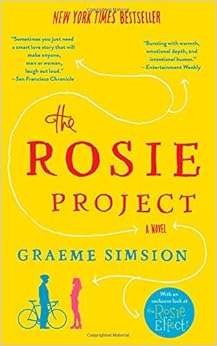
The Rosie Project
Novel by Graeme Simsion

The main character of this book (whose name I can't remember: keeping it real) has Asperger's. That's like having a mild form of autism, in which people struggle to understand other people's emotions and social cues, and have rigid adherence to schedules and rules. I have had several students with Asperger's and I have failed to love and understand them as well as I wish I had. This character is written in the first person with an amazingly specific voice, such as using few contractions, words like "correct," and a great deal of analytical language. Because we hear his thoughts, he's also lovable, in that he doubts himself and struggles to identify his feelings. He may identify people by their BMI but he is searching for love. That's the premise of the story, his use of a survey to try to find the perfect spouse, which is hilarious and heartwarming. Mostly, though, it makes me wish I could see more people's real intentions and therefore love them better. In that way, I'm like a person with Asperger's, I guess. 

Still Alice
Novel by Lisa Genova

I'm late to the party again, this time so late that the book cover is the same as the movie poster. I thought I had read this one but I looked again and I guess not. Then I accidentally stayed up until midnight finishing it. Alice has early onset Alzheimer's, a devastating diagnosis to anyone but especially to this Harvard professor of psychology. As soon as she learns about her diagnosis, she knows exactly how her mind will decay, she just doesn't know how soon. Or what she is going to do with the information. The end of this book came fast, which was a relief in more ways than one. It's unnerving to read about someone who is losing her memory, as we all have memory slips (Didn't I read this book already? What's that character's name? How many continents are there again?) that make us feel crazy. I also have had a recent diagnosis with degenerative disease, rheumatoid arthritis, that is infinitely more treatable than Alzheimer's but terrifying in my worst moments. Can I not open this jar because of RA? Can I keep doing yoga? Will I be able to pick up my nieces, nephews, grandkids? The crazy train keeps coming back to the station, and most of the time I don't get on board, but reading this book punched my ticket a few times. 

Thursday, December 3, 2015

Late to the party

In recent years, I have come to admire that expression: late to the party. As in, "I know I'm late to this party, but I really love the new Adele song." I actually haven't even heard the new Adele song yet, but when I do, I know that I WILL love it and I'll be able to sing right along and still take as much joy as everyone else in its apparent wonderfulness. That's the party; you can be late but still jump right in and have an amazing, memorable experience.

I often feel late to the party with books and authors. I think it's because I rarely buy books, or even choose them for myself, but just sort of stumble upon them on library shelves, or have them pressed on me by family who likes the same authors and styles. I also blame my children. I can find a way to blame them for most things, in this case for not letting me read as much as I want (all the time). Either way, those bestsellers at Costco take a while to find their way into my hands, sometimes a decade. Here are two not-so-new books (both published in 2010) that I crossed paths with recently.

How Did You Get This Number
Essays by Sloane Crosley

I didn't understand the bear on this cover and thought I was too late to the party, until A) I read the essay about Alaska and B) I understood that Crosley practices a level of satire and irreverence that makes her the spirit animal of 30 something women everywhere. If you are not a 30 something woman, maybe don't read this book. If you are, read it soon, if only for the essay featuring the board games Girl Talk and Mall Madness, to which I was mouthing "Yes" because Crosley nails on the head our mid 90's adolescent girl culture. It was as if she had been in the rec room of my family's home, sitting on a leaking bean bag chair and applying zit stickers to her forehead with my own friends. There's also her take on living in New York City, which I don't relate to at all but enjoyed hearing about from her bright, acidic, self-deprecating view. I look forward to discussing this with my irreverent friends everywhere. Message me.

Major Pettigrew's Last Stand
Novel by Helen Simonson

I feel like everyone read this book before me. Yes? Did you? So did you like the Major at first? I did, and then I didn't, and then I really did again.

Major Pettigrew is a very classic Englishman living in a rapidly  modernizing England. His wife is dead, his son is a greedy corporate yuppy, his village is changing all around him, and he's sometimes stiff as a board about it all. But he also is falling in love with the local shopkeeper, a Pakistani widow. He seems simple, but as you get to know him, you learn the depth of his humorous side and his good heart. He's what English teachers would call an unreliable narrator, because you realize part way through that he's lying to himself about something. I think I fell in love with him at the same time Mrs. Ali does. I also relate very much to his frequent crises of indecision and decorum. He is often "in horror" because he thinks he has offended someone. Me too, Major, me too. It's amazing, really, that I should relate to this man as much as to Sloane Crosley, since she is so much more like me in reality. But I think the traces of Jane Austen, James Herriot, and Maeve Binchy that appear in this novel point to how much my reading has made me who I am.

By the way, if anyone is wondering, there ARE a few books I have my eye on and would consider buying IF no one gives them to me for Christmas. I mean, I don't completely rely on the vagaries of the library book club choices to determine my own reading list. People of the Book by Geraldine Brooks still sounds promising, and I always love books by Kate Morton, even if her newest is boringly titled The Lake House. Just in case you were wondering (wink, nod, knowwhatimean).

Tuesday, November 10, 2015

Reading What I'd Like to Have Written

Friends, I am struggling. It's NaNoWriMo (National Novel Writing Month) and I'm feeling a little more than the usual self-imposed pressure to write. It's my civic duty to write this month! Ok, I don't really care that much, but I would like to be cracking along a little faster on my new manuscript. I'm having philosophical issues with what I've learned recently about writing, both in large and small scale. I heard some great advice at a writing conference and some of it is inspiring, but some is weighing me down. I can take out most of the adverbs in my writing easily and gladly, but can I change something fundamental about what I want to say and how I want to say it? I'm not sure I want to, and thanks to these books, I'm not sure I need to.

The Ice Queen
Novel by Alice Hoffman

First of all, look at that cover image. Now look at the title again. Cover. Title. See what I'm seeing? While this novel has several different covers, this is the one that I read from (was given by a thoughtful friend, actually), and I like to include the image here that I saw when I picked up the book each time I read. Do you see it? The incongruity? There's a butterfly on the cover of a book about ice.

This unexpected juxtaposition is actually congruous with the book. This is a story that is brimming with images and motifs--the ice and the butterflies, and also lightning, fairy tales, oranges, and moles (yes, moles). It almost doesn't leave room for the story. Definitely, the plot is slower and more subtle because of it. It's mostly about a woman and her brother. Their mother dies young, they grow up and move apart, and then the suddenly the woman moves from New England to Florida to live near her brother again. There she is struck by lightning and then her life truly begins to change. It's all told in a dreamy, ethereal tone that contributes to the fairy tale motif, but leaves room for the science of weather and math of chaos theory (famously described by butterflies). What it doesn't leave room for is the fast pace and snappy dialogue expected by so many readers, and publishers, today.

It's true that the leisurely, dense story telling style was a little discomfiting to me at first. I didn't rush back to this book every spare minute I had. Eventually, however, I was engaged and entertained and also enriched by reading it. I was also given hope that my writing, described by an editor as "a quiet story" can be just what someone is looking for, even without a gasp of suspense per page.

The Truth According to Us
Novel by Annie Barrows

If the previous book gave me pause about grand writing ideals, this one made me laugh and forgive all the adverbs again.

Let me explain. Some quick and seemingly excellent advice I received was how to tighten up dialogue. Specifically, I learned to cut out adverbs, slashing juvenile words like "retort" and "snap," reduce "said" altogether, and NEVER EVER write "replied" or "asked." Basically, I should use fewer stupid words for talking and use more actions showing what the characters do as they talk. That seems reasonable and I'm enjoying putting it into practice.

This book, however, completely ignores that advice and still has some of the best dialogue I've read. It's all about the characters. They are witty, true, and they love each other, even though they also lie, kick each other out of the house, and sneak food out of the kitchen. I love them and I want to visit them in real life.

The Romeyns are a formerly grand family in a small, genteel but Depression-shabby town in West Virginia. They take in a boarder who was hired to write the town's history. Hilarious anecdotes pop up, along with all the family's secret yearnings and secret doings. It's just the kind of story I love, and I will work hard to include many of its elements in m own book. I'll also continue to leave out "replied," since an awake reader can tell the character is replying. Unless, of course, a character must reply snappily as the Romeyns do.

Confession: I quit March by Geraldine Brooks. I guess I didn't want to know the story of the dad from Little Women. There's nobody like those sisters. And now I'm reading How'd You Get This Number, the most bizarre and spit-laugh inducing collection of essays from a New York twenty something. It's good for a change.


Wednesday, October 14, 2015

I Heart Memoir

I just wrote several pages in the journal I keep for my youngest son. I have done this for all three of my kids: kept a baby book for a year and then a monthly journal for as long as there's room in the blank book I buy (usually another year or two). Before you get all impressed, this is it. I don't do hand print art, I don't scrapbook pictures, I don't make treasure boxes of art from each of their school years. I don't craft. I just write. I enjoy the act of writing and the reflection on my children's growth each month. The process, however, gives me great respect for memoirists. I try to find a common thread, a uniting element, or at least some natural transitions, for one month of experiences, for only a few pages. Writers of memoir take years of their lives and hundreds of pages and not only tell what they remember, but tie it all together and make it into a good story. Because the story is really what it's all about, isn't it?

Post Traumatic Church Syndrome: A Memoir of Humor and Healing
Memoir by Reba Riley

Think this sounds, well, traumatic? Take a look at the peacock on the cover. It's not. True, Riley experienced a bit of a break down and left the conservative church/school/job/life she was in. True, she is suffering from an unknown physical ailment for most of the book. She also meets some people who have been truly abused at the hands of the church. But as Riley takes a year of her life to explore other religions and church denominations, she does so with humor (see subtitle), self deprecation, and a huge amount of grace. This reads more like the blog that was its first incarnation, than like a treatise on what's wrong with church today. It's more Glennon Doyle Melton than Rachel Held Evans (bloggers I love). And though I have not left the church I grew up in, I did explore many different churches while in college, and I do have many unanswered questions today about the role and future of the American church. So I resonated with many of her forays into different church groups, especially when she visits an all African American congregation (bless you, Bethel African Methodist Episcopal Church and your hats and your ban on bathroom breaks).

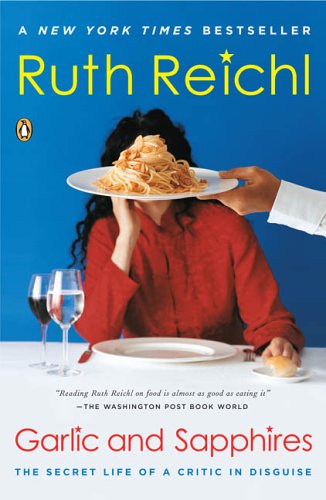
Garlic and Sapphires: The Secret Life of a Critic in Disguise
Memoir by Ruth Reichl

Today I am making homemade applesauce, which makes me a little proud of myself, and chicken cooked in Campbell's soup, which makes me a little ashamed of myself. Especially considering the amazing recipes and tales of culinary adventures in this book. Reichl was the restaurant critic for the New York Times for a number of years in the 1990's. Early on in her career, she was "made" and ended up wearing a series of disguises in order to eat at restaurants without receiving special treatment. This world, a world of four star restaurants and cutthroat competition and fur wearing patrons and snooty maitre d's, was all new to me but made very real by Reichl's honest take on it. Through the book, she struggles with what her disguises reveal about her own character, as well as a career centered on excess. The amount of seafood and truffles and foie gras she eats is both attractive and appalling (I mean, I'm guessing here. I've never eaten most of those things.) It's a window into both this other world and this woman's soul.


Friday, September 25, 2015

A is for Autumn

Teachers love fall, and I may be staying home with kids, but the teacher in me hasn't diminished. Fall feels like more a rebirth kind of season to me than spring, with all new opportunities for learning: learning new people, new ways of doing things, and of course, new ideas. That may have been in my mind on a very subconscious level when I picked my three most recent books. I have learned a great deal from the first two and am really enjoying the third already. And two of them are (gasp) nonfiction.

The Secrets of Mary Bowser
Historical Fiction by Lois Leveen

Did you know that some free African Americans posed as slaves during the Civil War in order to spy in the South for the North? This amazing fact seems like it should be common knowledge. More importantly, this amazing story should be told to children and taught in schools. Mary Bowser was a slave in Virginia, freed by her mistress and sent to school in Philadelphia, helped with the Underground Railroad, and then returned to Virginia during the war to act as a hired out slave in Jefferson Davis's presidential mansion. Mary was an amazing person, portrayed here honestly, with doubts and selfish moments, but ultimately as an unknown hero.

It gets my ire up a bit that so many women with big roles in American history have very little known about them. It reminds me of the book The Invention of Wings by Sue Monk Kidd and how little I knew about the women involved in the abolition movement. Women indeed hold up half the sky.

As novels go, this is true historical fiction in that it is based on the lives of real people during significant moments in history, but with fictionalized dialogue and minor characters. The result is not stilted but flows evenly as a story should. Leveen's research seems both deep and wide in her understanding and portrayal of the times and their issues.

If you ask me, Mary Bowser should have been on the ballot for the new face of the $20 bill.

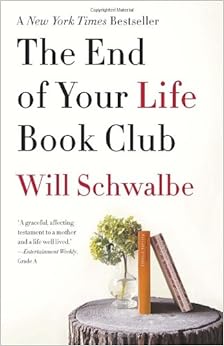
The End of Your Life Book Club
Memoir by Will Schwalbe

This is it, folks. This is a book ABOUT BOOKS! And there is a LIST of books at the back. Shudder of ecstasy.

I probably shouldn't admit to such enthusiasm, because this book is actually about the books the author read with his mother in the last two years of her life. When Mary Anne Schwalbe is diagnosed with pancreatic cancer, Will brings books along as he sits with her through chemo treatments, and they end up reading and discussing the books together. They become intentional about reading the same books and call it a book club, sometimes reading about her cancer but more often reading a great variety of classics and contemporary books.

Their discussions bring the books deeply into their current experiences, as well as providing an escape from those same situations. I relate completely to this dual role of literature in my life, as I hope you can see through this blog. I can't pretend to be as deeply insightful or as well read as the Schwalbes, though. Mary Anne's vast life experiences and sense of urgency due to illness, and Will's years in publishing and insomnia, lead both to read and understand far beyond me.

Two books I wrote down from their list of reads are Geraldine Brooks' People of the Book , which is not at our library and I may need to actually buy, and the Jeeves series, which I coincidentally picked up from my grandma's "little library," the shelf of free books she has in her yard for neighbors to exchange. I guess I'll be reading Jeeves first. But after my last non-fiction foray, Post Tramautic Church Syndrome by Reba Riley. Don't worry--so far it reads a lot lighter than it sounds. I mean, there's a peacock on the cover. How serious can you take a peacock.


Saturday, August 29, 2015

A New Purpose

I'm at an interesting juncture in my life. I'm taking a year off from teaching, just to take care of my family. I say JUST not because it won't fill my days (and nights, and weekends) or because it's not hard (stay at home parents, I feel ya) but because I'm not ALSO responsible for 70-90 other humans during the average day. My hours are no less full but my brain is just a little more relaxed. And my heart rate.

I'm looking forward to filling this time with many things (mostly things aged 9, 4 and 2), but one of them is reading for the purpose of becoming a better writer. I'm probably not going to read more, because I hope to write more, but I am going to read with a new lens. I find myself thinking about the pacing, the timelines, the character introductions, the continuity, the adverbs, rather than just enjoying the characters and story. And I compare. How is this like my writing, and how should mine be more like this, or is this not at all what I'm aiming for? I know I need to find a writing group to ping with questions like this, but for now, dear book club, I have you. So here goes.

Letters to the Lost
Novel by Iona Grey

Just as I both liked and disliked this book, I gleaned insights about what I do and don't want for my own writing. With a two part story line, set in contemporary and WW II era England, and the converging lives of a 1940's pastor's wife and an abused bar singer on the run from her ex-boyfriend, this seems to be right up my alley. I love that kind of story, for the quickness of the pacing and the variety of settings and different types of characters allowed by switching time periods. I do strive to do this in my own writing and saw some clever ways of making the story arcs cross over each other. I also admired the descriptions of the various spaces in the story: beautiful, sacred, neglected, impoverished, elaborate...the rendering of the settings lent itself well to the story, and I want to work on that. What dissatisfied me, and makes me eager to avoid in my own writing, is the convenience of certain plot conventions and character traits. The characters changed too quickly to reflect real relationships and the way we learn from mistakes, and the coincidences that ironed out kinks in the plot were too easily plopped in the characters' paths. I'm all for a happy ending but it doesn't have to be a Hollywood happy ending, you know? Lesson learned

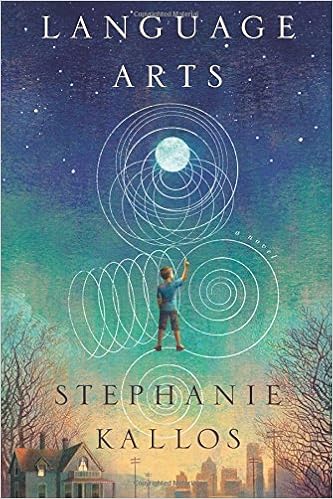
Language Arts
Novel by Stephanie Kallos

Kallos is a Seattle author and I really enjoyed her first novel, Broken for You. She writes very realistic, rounded characters who are chipped in places but resilient. This one is about an English teacher, divorced and lonely, with an autistic son, who seems sort of in a midlife crisis but is really more asking and answering why his life is what it is. It's a convoluted story line, mostly about one year of the main character's childhood and present time, but with other voices and even some technical writing mixed in. I think because of the journalistic tone of some of the writing, it was off-putting to me. I almost quit this one but I had to have some questions answered. Yes, I skimmed the ending when I was about halfway through, like I often do, but this time it wasn't because I needed reassurance about characters I love. I needed to know it was going someplace. And it was, and it was a good place, so I'm glad I finished it. Is it something I want to write? No. I like Kallos's thoughtfulness and want someday to write more serious, yet still entertaining, literature like her. But it's maybe a bit too staid for me. I found myself drawn to the scenes of real places, though, and want to emulate that sense of place, as well as her obvious writing from what she knows, which is Seattle and teaching and a hint of loneliness.


Monday, August 17, 2015

Vacation Grab Bag

It's that time of year...vacation reads! My family takes an annual trip to a lake house and my favorite part of the week, aside from the eating, drinking, and sunning, is reading. Even better, my sisters and cousin and mama and grandma and I share books. It's like an actual book club, but we never have to go home and we wear our pj's most of the time. Love. Here, in a nutshell, are the books I read just before, during, and after vacation (Because, you know, I was packing and unpacking a family of five for a week at a lake. Who has time to blog amidst such hot chaos?)

Everything I Never Told You
Novel by Celeste Ng

At the end of the school year, one of my (favorite) students asked me why we didn't read more books or articles by women of color. I blinked and said, "Good question." So together we selected some books from a list of recommendations a friend found, and this was one of them. I hope I see this student again (she may be moving) so we can talk about it. It's kind of dark, which is right up her alley and also her chosen hair color. A blended Asian American-Caucasian family loses their teenage daughter to drowning, and, true to the title, eventually spills everything they've been keeping from each other. The secrets are varied and decades old, some small and some shocking. It's how they forgive each other that made the book readable for someone who doesn't love darkness.

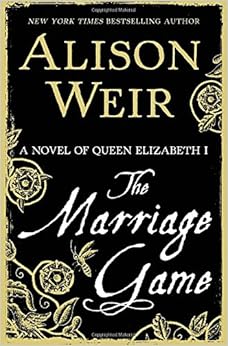
The Marriage Game: A Novel of Queen Elizabeth
Historical Fiction by Alison Weir

Researched to a the finest detail (most of the dialogue is quotes from primary sources) but eloquently rendered, this book is true historical fiction (which is kind of a loose term most of the time). The book encompasses Elizabeth's entire adulthood, with hints of her childhood, but focuses mainly on Elizabeth's continual ploys to stay single and rule on her own. I love English history and literature, but I think I may have read too many books about the Tudors, because I was hoping for some revelations or new theories, but if you've read or seen much about Elizabeth, there's nothing new. I was a little bored. In fact, I made myself finish it the day before leaving for the lake so I didn't have to read it there (or lug it along--it's heavy).

Orhan's Inheritance
Sort of historical fiction by Aline Ohanesian

I chose this one at random from the library shelf, and to be honest I thought it was called "Orphan's Inheritance." Adoption and finding one's roots is a theme of the novel I'm writing, so I was intrigued. Those themes are in this book, but in a subtle way. It's actually a beautiful but disturbing book about the genocide of Armenian Christians in Turkey during World War I, including a quest by one man to find out more about his grandfather's life during that time. It was not what I expected and sometimes that's the best kind of book. I also gleaned a few ideas for my own writing. One thing I'm thinking about now is the balance between sorrow and joy in a novel. Sorrow makes the story and joy completes it, but how much to have of each, and where?

800 Grapes
Chick Lit by Laura Dave

See what I mean about playing it loose with genres? Technically this is a novel or women's fiction, but to me, this was the epitome of a vacation read. It was fun, it was fast, it was easy. I could so easily picture the kind of flat characters, and predict the plot, that it seemed like a movie more than a book. The main character (I can't even remember her name) finds out a secret about her fiance, her parents, and their family vineyard all in the same day. Whirlwind week before wedding ensues. I expect to see it in the theaters soon (although I'll only rent it when my sister comes over for a girls night).

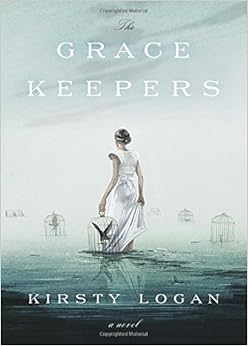
The Grace Keepers
Futuristic folktale by Kirsty Logan

The jacket of this mentions Scottish folk tales, and I was in a hurry with two boys tugging on my legs as I chose it at the library, so I was surprised to enter Water World. Remember that weird Kevin Costner movie? Seriously, this is a more thoughtful version of that. Two women's lives both fall apart and collide, and there's also a floating circus. The way that sentence is composed is how this book feels, oddly tangential. During and after reading, I always felt like I was on a boat, literally rocking with the waves, even when I wasn't floating on the lake. All around, a weird experience.

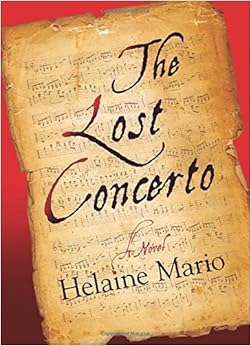
The Lost Concerto
Mystery by Helaine Mario

I finished The Grace Keepers just after arriving home from vacation and was eager to start a new story. Reading is my escape and nothing requires escape quite like a the post-vacation aftermath of laundry, cleaning, and grocery shopping. Fail. I do not do mysteries. There is something off putting to me about the description of a sinister man sitting in a cafe, watching a woman come and go across the street. Maybe this could have improved--there was almost a Dan Brown quality to it--but I didn't stick around to find out. Life is too short to read bad books.


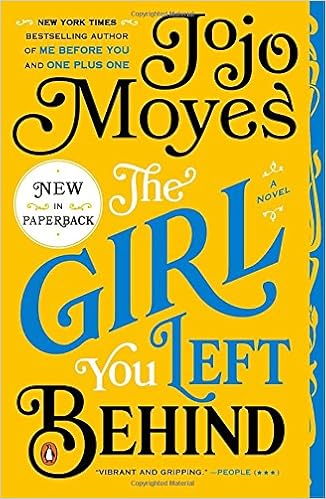
The Girl You Left Behind
Novel by Jojo Moyes

If this was a contest, this book would win. I may have go get everything Jojo Moyes has ever written now. In fact, I thought this was one of her books written prior to Me Before You, but it's brand new, so that means I have some other good reading ahead. This one is starkly different, too. There's a parallel story of a woman during WWI whose husband is a painter, and the woman in current day who owns the painting, connected by a bitter struggle over who should own the painting. Moyes writing is deceptively simple and I think that's what makes it great. I gobbled this one up and I hope to one day write like her. That is all.