Novel by Julie Wu
I'm glad I do this for free and don't really have to think of much to say about this book to reach a word quota and earn my money. Actually, the money would be nice. However, this book was boring and I'd have to dig pretty deep to find thoughts to share. Here's the minimum:
The cover is pretty. The title is catchy. The premise is good. Neglected third son of a Taiwanese government official meets pretty girl during World War II air raid and then struggles to find her again and make good in life. Specifically, he goes to school in America and struggles to succeed as a scientist of some kind that I still don't really understand.
I think what I didn't like was the writing style and lack of any plot other than what I already described. Basically, the blurb writer did an excellent job selling the book on the inside cover, but the attraction ended there for me. The main character is kind of whiny and never really learns to let go of wanting his parents' approval or to trust himself. And while I like learning about other cultures, I think the writer assumes the reader will know more than I do about Taiwanese culture, which is heavily influenced by both the Chinese and Japanese. And the science totally lost me. Sorry, Ms. Wu. I don't get it.
Love to read but too busy/lazy/tired/grumpy to leave the house? This book club's for you!
Tuesday, July 23, 2013
Monday, July 15, 2013
Two surprises, a best bet, and a "meh"
It's that time again! That's right...vacation binge reading synopsis time! I have to get down and dirty when writing about the books I read while on vacation because there are so many. Wait, I'm a teacher, so haven't I been on vacation for a month now? Yes, but I mean a family vacation, at a lake, with grandparents and aunts and uncles who share the parenting load so I can binge on books and snacks. This year, being hugely with child, I slept more and read less than usual, which means for once I was the overpacker instead of my husband, having brought nine books and only read four. Here they are, in the order read, with random thoughts attached. Do with them what you will.
I Feel Bad About My Neck, a memoir by Nora Ephron
How have I never read Ephron before? She is HILARIOUS. You know about my love affair with Anne Lamott--Ephron is easily as funny and even more irreverent and self deprecating. For the first few vignettes in this collection of random thoughts on being a woman, I thought maybe I was reading this too young, that I wasn't going to be invested enough in the jokes on neck wattles and face creams. But she also ranges back to her time as a young mother and a struggling writer, both of which I totally get, and taking it all together provides a delicious slice of a woman's life. Totally readable.
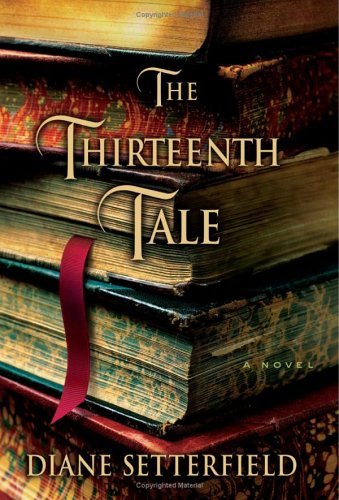
The Thirteenth Tale, a novel by Diane Setterfield
I admit, this is a re-read. I found it at my grandma's house and thought it would be a good vacation book. It's an enthralling literary suspense (no, that is not an oxymoron) that I picked up at random a few years ago from the library and I wasn't fully prepared for how good it was or what genre it was or even what era it was taking place in (still a little unsure about that, actually), so I was confused for a good portion of the beginning and needed a refresher. It also has a "Sixth Sense" sort of twist that makes you want to reread and watch for clues the second time around. Highly recommend. The setting of a cold Yorkshire winter was a little incongruous with lounging around a lake, but a good book should take you out of your life, right?
The Next Best Thing, a novel by Jennifer Weiner
She's going downhill. That could be the title of a Jennifer Weiner book, now that I think of it. Her first few were so poignant (while still being total fun and fluff) but now that she's branching away from the fat-single-girl schtick, I think she's losing some steam. This one is about a physically scarred young woman (ok, not so far from fat single girl) who is trying to make it as a screen writer in Hollywood. Maybe I just didn't care enough about the situation. Struggling writers I get but in Hollywood? Nah. I'd skip this beach read and take another one by Diane Setterfield any day. I should check and see if she's written any more...
The Soldier's Wife, historical fiction by Margaret Leroy
This was a surprisingly great book. Even though I am morally opposed to any more books being published with the word "wife" in the title, I chose this one because it's set during the German occupation of the British Channel Island of Guernsey in World War II. That's where the fantastic book The Guernsey Literary and Potato Peel Pie Society takes place, which is a fabulous book of fictional letters and unexpected relationships. I wanted to go back to that world and this book did take me there, but with more melancholy than mirth (and a stupider title). Still, I would like to read more by Leroy and would have much more to say about this book if I hadn't prattled on so long already.
One of my favorite things about vacationing with my family is the book envy we all come away with. Since coming home I've started two books: another WWII novel from the library, this one set in Taiwan, and Tiny Beautiful Things, a collection of advice letters by Cheryl Strayed which my cousin was reading at the lake. I also plan to steal The Orchardist and Maya's Notebook due to watching my mother read them with such pleasure. Oh, the joys of looking forward to a good book.
Tuesday, July 2, 2013
The Lacemakers of Glenmara
Novel by Heather Barbieri
Just today, I had made up my mind 100% totally and completely to stop blogging for a while. For one thing, I'm reading so many books that you all are probably sick of me. For another, I'm hugely pregnant and tired and really should be working on submitting my novel to more agents. But then I sat down after an exhausting 15 minutes of yard work and realized that nothing really makes me happy right now (except sleeping children and massages) so I may as well blog. And now I'm happy, sitting here, writing. So there you go. Welcome to my crazy.
Back to the real topic. Who asked for light summer reading? This is it, folks. This is as light as it gets. Look at the cover: the kelly green, the doily, the undetermined source of fuzzy light in the background...it's an American finding herself in Ireland and all the sweet and sappy that can possibly entail. The main character, whose name I already forgot, goes to Ireland for a break after her mother dies and her boyfriend leaves her. Sounds a little like Wild now that I think of it, but this character is a wee bit tidier emotionally than Cheryl Strayed. She stops in a village, misses a bus, and stays to learn to make lace from the old(er) women of the village, who each have their own background and tragedies they are exorcising through crochet. And of course, since it's a light read, there is some falling in love. There are some real issues addressed, like a struggling economy and spouse abuse and the slow modernization of the Catholic church, but those are the subplots. Mostly it's like a glass of sweet tea, which I don't drink, or a Weight Watchers ice cream bar. Enjoy in moderation or your mouth will pucker eventually.
Interestingly, this writer is from Seattle and so are the authors of three of the books I got at the library today in preparation for a vacation. Go Washingtonians! Make a name for us so I can get published soon. And by the way, I refused to do the awkward pregnant lady dance at the new release and book club shelves at the library. Instead, I pulled up a chair.
Friday, June 28, 2013
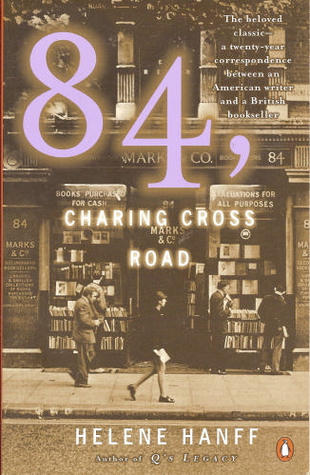
84, Charing Cross Road
A true story in letters by Helene Hanff
Stop for a minute and think, just think, about how many books there are in the world, how many books have been written or compiled and published. Even for the well-read (which I am according to multiple facebook and Barnes & Noble polls, thank you very much), the amount of books any one person has read compared to the amount currently in print is like a speck of pollen compared to a mountain. Or a Hoo to Horton. Tiny. That's how I feel when I come across a book like this.
You've probably at least heard of this book, or the play or movie adapted from it, but I am apparently completely out of it. Or I only read what they told me to in college. In one way it's kind of sad, and frustrating, and in another way, hooray! Think of all the books I have yet to read! I just hope I find all the good ones. As usual, the book club section at my public library is helping me with this. While waiting for my stack of beach reads to appear in my mailbox, I took the kids to the library and entrusted the seven year old with the life of the two year old while I perused the book club shelves, standing far back so I could read the titles at the bottom since I can't bend down over my seven and a half months pregnant belly. I got some weird glances, but hey, I am definitely not the weirdest character at my library on any given day.
I picked this one because A) It is short so I could read it before the mail order ones came and B) It is light, so I could talk the seven year old into carrying it in her library bag while I wrangled the two year old into the car and C) It looks British. What I was assigned to read in college was mostly British so it's a comfort area for me.
After all that, lo and behold, when I got home, I discovered this gem! It's a collection of letters between Helene Hanff, a New York freelance writer, and Frank Doel, an employee at a London used book store, beginning with a book order and ending up a truly darling friendship, cemented by a love of books. Hanff also includes letters she received from Doel's wife and other employees at the store, giving a fairly good picture of their wonderful relationship of cat and mouse, American and Londoner, blatant humor and dry humor. At times the letters are laugh out loud funny, as Hanff writes in all capitals when she accuses Doel of sending bad books and he replies with formal, understated jabs. Other times you want to cry at the sheer humanity that the people in the correspondence, who don't even know each other, demonstrate in the post-war world of 1949 to 1969.
Some short thoughts on a short book (I read it in a day):
I now want more than ever to revisit London, as Hanff continuously plans but never does in Doel's lifetime. I was sad to read that the bookstore is no longer (the building's not even there apparently) but there is so much more to see and show my husband! I won't waste time on this next trip going to the stupid Millenium Dome because some boy I like is going there.
I do not ever want to watch the movie, which I read implies a romantic relationship between them. Since Doel is married, I don't want that alleged infidelity to sully this dear slice of life. Also Anthony Hopkins plays him and I still see him as Hannibal Lector, not a nice man in a book shop.
I feel at once validated that I knew so many of the authors that Hanff requests from Doel, but since they're all British I feel embarrassed that I haven't read most of them, but since they're all really old I don't actually care that much in the end.
Wednesday, June 26, 2013
The Paris Wife
Novel (ish) by Paula McLain
Novelish? What does that mean? It means another "true novel," one written in novel form with plot and dialogue, but based on letters and journals by real life people. In this case, Ernest Hemingway and his first wife, Hadley Richardson, are the real people. That sentence sounds false to me, though, because this book brings these real people to life more than they ever could have been in a historical account, and because Hadley becomes so much more than Hemingway's "first wife." That may be how history remembers her, but not so for anyone who reads this book.
I have to admit not knowing much about Hemingway or his writing. I know from literature classes that his writing was revolutionary in its simplicity and starkness and truth, and from pop culture movies that he was part of a hard-partying American artist community in the 1920's in Paris. I've only read a few of his stories, though, and none of his novels because I find his writing too sharp and dark. I guess it goes hand in hand with his depression/alcoholism and PTSD from World War I. Not for me, thanks.
The idea of this book, however, brings to life not just Hemingway but mostly his first wife, Hadley. They have similar upper middle class backgrounds in the United States but move to Paris for his writing career shortly after marrying. She keeps him grounded for a while, supporting his career and moving him toward the right decisions with friends and finances, but the very fact that she is his "first wife" tells us that eventually they divorce. There are three very short scenes from Hemingway's point of view that hint to us that it's his infidelity that drives the wedge, in addition to Hadley's own voice telling what she wished she'd known then and so on. You know from the beginning that this will have a sad ending.
What I wish I knew more is how much McLain's writing style mimics Hemingway's. Like I said, I haven't read very much by him and don't want to, mostly for the content. But this book seems to copy what I understand is his style in that it's very much to the point and journalistic, a simple retelling of events, while somehow also weaving a picture of the dazzling European scenes, the hectic and confusing post-war times, the conflicting emotions, the lavishness of their neighbors contrasted with the poverty that is their life. It's kind of remarkable.
I don't think I'll be reading Hemingway as a result of this book, though. I've had enough of him; he might be an amazing historical and literary figure but he's also a total ass. He makes his wife blame herself for his indiscretion and sucks up all the air and life around him. He WAS her life and I'm tired of thinking about him when I should be thinking about her. So there.
One thing I wonder is: how do they go on so many vacations even though they bemoan their poverty all the time? And hire a housekeeper and a nanny? Is it the place or the time or what? I wish I could have a nanny and vacation at the French Riviera. I wouldn't trade it for my non-cheating marriage, but still, sounds nice.
Tuesday, June 18, 2013
The Other
Novel by David Guterson
Dear book club friends: stop me now. Seriously. It's four days into my summer vacation and I need some light beachy reads or I may never be able to relax. I went from Wild to this, the story of two high school buddies from the late 1970's in Seattle who backpack together and talk exisentialism and Gnosticism. It's too much.
So now that you know how I really feel...this is actually a good book. I truly dislike very few books. I think I appreciate the work that an author put into them, and I like words that are put together well, and I just like to read. Period. It's hard for me to completely pan any book. David Guterson also wrote Snow Falling on Cedars, which is amazing, and East of the Mountains, which is fun to read (even though it's kind of dark in tone) because it's set in my home town of Wenatchee and the surrounding area. I like Guterson's style of rich but real description and deep characterization and his slow burning plots. But I think for me, this one came too close on the heels of another hiking book and too close to Crossing to Safety which shares this book's deep introspections on growing up and classism and loyalty and the nature of knowing others.
The bad news is I already started The Paris Wife, about Ernest Hemingway's first wife, so that doesn't promise to be much lighter. The good news is I have learned my lesson and will be ordering some Jennifer Weiner and young adult fiction books from the library pronto. I hope your summer reading is looking promising! Let me know if you have any great light reads to recommend.
Saturday, June 8, 2013
Wild: From Lost to Found on the Pacific Crest Trail
Memoir by Cheryl Strayed
Don't be confused by the rugged looking boot on the cover. Even I, a committed couch traveler, hater of camping, lover of the idea of nature but not so much the bugs and dirt and other yucky stuff, even I enjoyed this book.
When given the book I looked at the sub-title and thought, "Ha. Me? A hiking book? This must be for my dad." And so it sat on my nightstand for probably a year, next to reference books about writing and three books I've started and just can't finish (Everything is Illuminated, One Hundred Years of Solitude, Reading Lolita in Tehran: see my post about being a literary fraud), until it was THE LAST BOOK. This is a desperate state for me. I will read my daughter's Highlights magazines if there isn't any other option, so in this condition, I finally picked up Wild.
I found a pleasant surprise. While truly about her hike on the Pacific Crest Trail (a mountain top trail from Mexico to Canada, which Strayed hikes for most of California and all of Oregon), it's also a completely cathartic experience for both writer and reader. Strayed goes on the hike because her mother dies, her siblings scatter, and her marriage dissolves within just a few years. She starts to veer off the path she imagined for her life and needs a new path to walk, so even though she's not an experienced hiker, she decides almost on a whim to do this thing. She encounters every expected but not truly imagined obstacle: bears, lack of water, losing five toenails, rain, snow, heat, and just plain pain. She also meets generous and loving strangers and real characters in unexpected ways and places. All the while Strayed journals and retells her experiences, memories of her mother, self abuse, and self love, hence the subtitle.
The remarkable transparency Strayed displays in her story reminds me of, my favorite, Anne Lamott, but also of Eat, Pray, Love. She simply doesn't back down from anything, both in the wilderness and in her self-exploration. It's endearing rather than off-putting, reminding me of how broken we all are, how close to the brink we could all be if we lost those people most dear to us, the ones who ground us and make us who we are. This seems to be a trend in both books and blogs, as I read Jen Hatmaker and Glennon Doyle and Rachel Held Evans admit over and over again that they don't know what they're doing as women, mothers, humans, but they are just putting it out there so that everyone else can admit the same thing. I can't hike the PCT (I would literally die) but I can be brave like all these women, Strayed included, and be a truth teller, admit that I would be even more of a mess than I am without this huge tribe that is holding me together. For Strayed, her tribe changes both on the trail and after, but she finds one, and find herself within it.
Subscribe to:
Posts (Atom)