Tuesday, July 25, 2017

Vacation Reads and Eats

Vacation, glorious vacation! That week when I go away to a big cabin with my family (all 20 of them) and just eat and read and swim and read some more. We have some food traditions at our vacations, mostly just eating a lot all the time, but guacamole and Dan's chicken and a tub of licorice is always in order (though not necessarily in that order). Some foods, I noticed, seem to be quintessential reading food, as well as vacation food. Other times, the book begged for a certain food. So grab a snack for yourself and check out what I'm reading (and eating) this summer.

This is What Happy Looks Like
Young Adult by Jennifer E Smith

I actually read this a while ago, but I didn't you to miss out on it because it's a great book for a variety of reasons. A) It's a sweet summer read, about a teenage couple that falls in love over emails and summer vacation and ice cream. B) It's a CLEAN young adult book that my daughter can read, in case you are, like me, on the quest for books of that genre. I kind of wish I had read it on vacation, actually, because it was set where I'd like to vacation someday: small town East Coast, lots of lobster and ice cream and picturesqueness. I think you can guess what pairs well with this book: ice cream. My favorite right now is Talenti brand gelato. I try not to eat the whole tub. (Hey, they're small.)

The Wonder of All Things
By Jason Mott

I also read this before vacation, but my mom wanted to know what I thought, so I'm writing about it. (Are you reading, Mom?) This reminded me of a book I read years about but I can't remember what it was. That ethereal quality pretty much sums up this book. A little girl in a small town in the southern US is suddenly discovered to have healing powers, and the country basically descends upon her, asking too much of her, including various people in her life. It is slightly mystical, beautifully yet briefly descriptive (the author is also a poet, so he wastes no words), yet slightly unsatisfying in some way. The ending is not happy but couldn't have been different. What did you think, Mom, and why did we not talk about this on vacation? I think this book pairs well with apples and carrots. It's fall in a farm town. Plus I was making up for the ice cream.


Something Like Faith
Young Adult by Mike Rumley Wells

This book is dear to my heart because a friend wrote it. You can download it here. Here is what I wrote about it on Amazon reviews: "If you like John Green, check out Mike Rumley-Wells. A coming of age story that will connect with young adult readers, aaaaand with those adults who aren't quite ready to admit they're not young anymore: Paxton had a childhood that could have messed him up but a strong inner voice, a cast of gritty but faithful friends, and his love of a girl keeps him headed in the right direction. He constantly questions that direction, and himself, but it just makes him more likeable. How much he's allowed to love the girl is in question as well, which kept me reading all the way to the end, along with other well woven tensions. Written with heart and smarts, this is one to pick up." Pairs well with? Whatever your childhood nostalgia food may be. I ate Luke's Organic Veggie Straws, which are mostly potato chips shaped like tubes, but some are green, so I felt like I was eating healthy Pringles.

Britt-Marie Was Here
Fiction by Fredrik Backman

If you haven't read any Backman, get a book by him now. I like them all. The bestseller is "A Man Called Ove," which I read this time last year and still can't decide how to say his name. This is actually a follow up to "My Grandmother Asked Me To Tell You She's Sorry," also a vacation read and also great. Backman takes this grumpy, horrible characters and makes us understand them, through their past tragedies that made them so and through their subtly narrated view of the world that makes them seem, just, human. Britt-Marie is suddenly single, middle aged, and jobless, but also must clean and make things proper or she will die. She ends up in a dying town as their rec coordinator and soccer coach--hilarity and also blood ensues. She saves people and they save her in Backman's special brand of misfits coming together. You don't have to read the first one to get this one, by the way. At the lake, this paired well with popcorn. It's like watching a train wreck as Britt-Marie accidentally insults person after person. You need something to put in your mouth to cut the tension.


An Abundance of Katherines
Young Adult by John Green

If you notice the abundance of young adult, it's because I'm trying to read all the books in my classroom library so I can recommend them appropriately to my students. Good thing I kind of like to read. And wow, this is a great book, for the right kid. It is fouler than his other books and I would not let my seventh grader read it, so I'll be careful who reads it in my room. It also has Green's amazing teenagers who speak with eloquence about the human condition and deal with true, modern teenage hardships, but sometimes just want a hamburger, too. I love them. This is the story of a road trip by a child prodigy who just graduated high school and is in despair of making his mark, with his Muslim friend, who get sort of lost in the boonies and end of working for a cotton factory owning family with a pink mansion. You can't make that stuff up, unless you're John Green. Love it. Pairs well with...no, not hamburgers, dill pickle potato chips, of course! Actually, any salty or greasy food would do, as long as it's one handed so you can turn the pages as fast the as the dialogue goes.


 After You
Fiction by JoJo Moyes

This is definitely a sequel that you need to read after the first book. "Me Before You" is a bestseller about awkward girl Louisa finding her way while assisting rich, dashing, paraplegic Will with his daily life and then planned suicide. The sequel was demanded by fans, according to the afterword, and it's easy to see how a writer would want to meet that demand. I think Louisa's story was over, though, because this book kind of drifts around like Louisa does. She travels, falls off a balcony, meets a guy, thinks about changing jobs, meets Will's daughter he didn't know he had...easy to read and comfortable if you know Moyes writing, but kind of pointless in the story telling department. I enjoyed it as a beach read. Pairs well with licorice--sweet and totally unnecessary, but hard to walk away from.


By the way, I quit two books, too. One was called "The Bookaneers," historical fiction about people who stole manuscripts before copyright laws existed. It looked more interesting than it sounds, and then ended up being just as boring as it sounds. I think it was too smart for me. The other book was the opposite problem; I was too smart for it. I got a few pages in to the very beachy sounding "My Very Best Friend" and found I couldn't get past the problems with perspective (how did she KNOW what she did on the other end of the phone line?) or bad description. There's not enough time to read bad books. I may quit the one I'm on, too, if it doesn't pick up soon. I have a nice fat stack waiting for me and I just made some tzatziki dip. I gotta switch snack foods after vacation to fat-free Greek yogurt and veggies. My pants say so.

Friday, June 16, 2017

YA Is Where It's At

My tweenage daughter read my absolute favorite book recently. Anne of Green Gables has been recreated in a new series on Netflix and I told her she can't watch it until she reads at least the first book. She huffed a little and then read the book in remarkable time. When I asked if she was going to read the next one in the series, she said, "Not yet."

"Why not?" I wondered. Shoot, I thought. I made her not like them by making her read them.

"Their way of speaking gets into my dreams. I need a break."

I laughed and laughed. It's true. Books worm their way into our dreams and speech cadences and eventually our every thought about life and the way of the world and how and who we should be. While reading Angela's Ashes, I did dream in an Irish accent. And even more to the point, I reread the Anne books so many times that I had in my subconscious that I would one day marry a boy from my hometown who knows me better than I know myself, like Anne and Gilbert. (I did, by the way.)

I recently read two young adult books that I think showcase this remarkable ability of books, and also why it's so important to get the right books in the hands of young people.

The Secret Language of Sisters
Young Adult Fiction by Luanne Rice

My daughter got this at my school's book fair. She reads beyond the level of most of the books at her elementary school, so I let her get books from my middle school. She'll be there as a sixth grader next year anyway, which I am so excited about. I still check her books somewhat carefully, mostly so I can talk to her about anything that I think would confuse her or that I want to have a say in how she hears about it. I have taken away a few books that are full of swearing and sex. If I Stay by Gayle Foreman is a recent one like that, and this cover was somewhat similar. So I skimmed this one, okayed it for her, but then decided to read it first. She was in the middle of something else anyway and it didn't feel like a punishment to her.

This is a decent book. Two teenage sisters are texting and one gets in a car accident because of it. She is paralyzed for life. Through the incident, they discover they are not as different from each other as they thought. It's quite clean as far as what I was screening for, and has the obvious messages of don't text and drive, and love your family. But the underlying themes of jealousy and girl fighting and parents not understanding you and keeping secrets are a little cloying. It's not what I DON'T want my daughter to be reading, but not exactly what I want to encourage. The whiny, angsty thoughts of the main character may be relatable to tweenagers, but they worked their way into my thoughts.

Wonder
Middle Grade Fiction by RJ Palacio

How have I not read this before? There are too many books and not enough time and I'm playing a constant game of catch up. This book is everything they say--a well written, delightful, eye opening peek at the world from the point of view of a boy with a craniofacial abnormality. Even better, you also see things from the point of view of his sister and a few friends. I love this look at middle school relationships and feelings; this is not angsty, nor is the fighting made to seem normal. The caring adults in the kids' lives call them out on how to behave and some kids rise to the top in kindness and courage. It's both real and instructive. This is the book I want to seep into my consciousness and my children's. I will even use some of the words I heard to teach my own kids about kindness. And over all, it's just a really sweet read, and quick. You have time to read it before the movie comes out. Quick, go get it!

Sunday, May 21, 2017

An Open Letter to May

Dear May,

I think I'm ready to call it quits. You've been fickle and needy from the start, with your rain one day and sunshine the next, never letting me know if I would need an umbrella or sunscreen at the t-ball game. Speaking of t-ball, and school programs, and field trips, and fundraisers, and all the other last ditch efforts to make this spring and school year memorable...I'm done with them, too. I can barely read the entries on my calendar and there's very little space left on the white board where I try to corral my to-do lists. I didn't even get to read very much. So I'm just calling it. We only have ten more days together anyway. It was never going to work long term. I'm going to just go ahead and skip to June, which means I get to read more. I'll be happier with June.

Sincerely, me


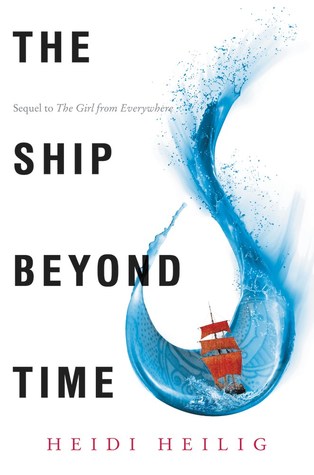
The Ship Beyond Time
Young Adult by Heidi Heilig

This sequel to The Girl From Everywhere did not disappoint in finishing the story that Heilig started. While the writing is that tiny bit of clunky that is acceptable in YA books, I was grateful also for the tiny bit of predictability as well. Heilig gives enough twists and turns, as there should be in a book about a ship that travels through time and to imaginary lands, to keep it interesting. I just find a happy ending comforting, especially after the first one was an unexpected cliff hanger. In this one, the main character, a girl named Nix, is caught between two potential true loves, as well as between helping her father and saving the world. Nix is a strong female lead, as compared to other characters in similar situations (ahem, Twilight). I think this is the last book in the series, but I would read more by Heilig, and my students like them as well. I needed this kind of book for May--one with suspense but not so much that I had to read it every second. I just couldn't. Dang it.

Yes, Please
Memoir by Amy Poehler

I must say I loooooved Tina Fey's Bossypants, in which her voice is practically audible through the words on the page (without actually being an audiobook, which makes me queasy to listen to). I don't think Amy P's voice translates quite so well, but it may be that I don't follow her as an actress as much. I picked this up from my NEW favorite place, the employee recommendation section at the library (thank you for the curating, librarians), and thought it would be similar to Tina's, which it is in style but not in substance. I suppose, again, it's good that it was an easy and not mesmerizing read, since May is such jerk right now. But I just didn't identify with the anecdotes or find the strong feminist leaning here as I did with Tina. (See how we're on first name basis now? That's me and Tina, after her book. Not me and Amy P.) I will, however, name drop like Amy P. does and say it was just all right for me, like Randy on American Idol.

I guess I'll start one of the other books that is overdue at the library, and hope that May will respect my wishes and leave me alone so I can read them in peace.


Monday, April 3, 2017

How do I know what I think until I write it?

"I don't know what I think until I write it down."

A recurring theme in my life lately has been this quote by Joan Didion. It came up at a training I attended as a teacher. I used it to explain something to one of my children. And most often, I remind myself of it as my jumble of thoughts chase each other and step on each others' toes and drown each other out in their clamor to be important in my mind. I need to write down my thoughts to know what they are. My to-do lists, my novel outlines, my lesson plans, my prayer lists, and here, Un-book Club friends, my thoughts about life and reading--they are best laid out on paper and screen. As I write, the web of thoughts I had about a book straightens out and comes back together in a way that makes more sense to me than it did while I was reading. Thank you for joining me as I make sense of my world, both inner and outer, real and imaginary.

Be Light Like a Bird 
Middle Grade Fiction by Monika Schroder

I found this delightful book via a my school's wonderful art teacher, who also taught with the writer at an international school. I am always eager to support other authors I know or might know or first time authors, in the hopes I will one day be one of them. Monika is not a first time author, and her experience with writing, and travel and young people and artists, is obvious here. This is truly a beautiful book. The cover and title suggest a motif that carries throughout, with a character named Wren who watches birds, but also studies human nature. Wren wrestles with her father's death and her mother's way of grieving and with the ever-difficult middle school friendships. What strikes me as a write is the precarious balance of dark and light that is present in the book's characters and themes. Perhaps that's why I so enjoyed reading this with my daughter and talking with her about it. We are at a precarious balance ourselves, as she enters adolescence and tries on new personas and ways of relating to me. It's also hard to find reading material that is challenging for her emotionally and intellectually, yet age-appropriate. This is a good balance.

The Girl from Everywhere
Young Adult Fiction by Heidi Heilig

Apparently if you want to write a bestseller these days, you call it "The Girl" something. It used to be "The So and So's Wife." Now it's girls. I don't know if that's moving backward in feminism or not, but at least this one is about an actual girl. Nix is 15 and she lives on her father's magical time travelling ship. His mission, though, is to find a map that will take them to the year her mother died so he can stop it from happening, which may stop Nix from being born. She's a bit torn. This is a fun fantasy, historical fiction blend with a healthy dose of romance. I read late into the night and immediately requested the sequel. It was frustrating, though, to end on as much of a cliff hanger as this does. I have noticed that many of the young adult or middle grade series do this and I now as I write, I wonder if this is a new phenomenon. My Nancy Drew books never had this problem. I also did not know that this was going to be a series or have a sequel, so I feel a little cheated when there isn't a more satisfying ending. I guess that's what I get for reading young adult fiction. I should act my age, or get used to it.

The Japanese Lover
Fiction by Isabel Allende

Speaking of acting my age, this is probably the definition of it. Reading Allende always makes me feel smart and is so satisfying. I've also loved that her last few books peek into a different time and place than her usual Chilean magical realism. This is set in San Francisco in a retirement home as a young assistant sets out to uncover the past of one of the residents, at the request of the resident's grandson who is writing her memoir. It spans the century and the globe, focusing on World War II, the Japanese internment, and its aftermath. This book made me long to visit San Francisco, to keep working on my own writing, and to read something other than about World War II! Honestly, the war seems to have been the focus of most of the historical fiction books I have ever read. I have on order The Nightingale, after it has been recommended by so many people, even though I don't really like other books by its author. The book The Zookeeper's Wife (see? wife titles!) is being made into a movie and it's about WWII). And these are just top of the heap examples. It does make great books, but it's also just so common.

Book club friends, what do you find spinning in your brain as you read? How do you make sense of it? Notes in the margins, Post-it notes on the back, texts to your friends reading the same book? Whatever it is, get it out there!


Monday, January 9, 2017

Yes, I read the end first

I got yelled at again for reading the ends of books first. Maybe "yelled" isn't accurate. She stared at me in disbelief, dead eyed and open mouthed like a fish, and then said something along the lines of, "Well, I'm not questioning your ENTIRE existence as a reader, but..."

So I explained, calmly and rationally as I always do when my little habit shocks and dismays people (although most of them don't usually call into question my right to own a library card). I read the end first because I care. And it's not actually FIRST. I read about a quarter of the way through, and then before I become too attached to the characters, I have to know if they're going to make it. Does anyone die? Is a heart going to be broken? Lost limbs, lost children, lost minds? I need to know so MY heart doesn't get broken, at least too badly, if I should happen to love the characters and want to hang out in their kitchens and go on their family vacations. So I just SKIM the ending. See? It's not so bad and for a good reason. I'm not a cheater.

She wasn't convinced. She wanted to know how I could keep reading, if I know the end of the story. She still didn't get it. It's not about what happens at the end of the story. It's about who it happens to. As long as the characters go there, I'll go too.

You're probably still not convinced.  Let me offer you an example, or actually two.


If you haven't read or heard of Inspector Gamache, start here. These are the third and fourth in a series of murder mysteries, but wait. They're not like other murder mysteries and even though I'm using them to prove a point, I DON'T READ THE END FIRST. After reading just a few of these beautiful and rare books, I discovered I don't need to read the end first. Not because I don't love the characters, but because the author takes such exquisite care of her characters that I don't need to worry about them. Nothing bad will happen to them. Or if it does, it will all be okay anyway. Even though these are MURDER mysteries and bad things do happen, the main cast are delivered to the end of the story tenderly by the Inspector and each other. They are often even better for their experiences, more aware of themselves and their neighbors, of the workings of the universe and of God. They become tolerant of differences, celebrate life, forgive mistakes, make poetry and art and croissants and babies. I love them, as you can see, but I don't worry about them. The murderer will be caught and they'll get to eat their final decadent dinner. It's the exception that proves the rule.
 
I've heard there are ten more in the series. If Louise Penny ever proves me wrong and kills a main character, please send French food to help me in my grieving. Meanwhile, I'll be like Inspector Gamache and trust. Just trust.

Wednesday, December 21, 2016

Be a Minute Stealer

Today I was a minute stealer. I heard that phrase used this fall at a school district training about teaching kids to love reading, and I thought, "Yes." That's me. When I'm reading a truly excellent book, I will read in whatever snatches of time I can find. I bring good books with me to doctor's waiting rooms, to kids' swimming lessons, anywhere I think I might get a few minutes in. If I don't bring it along, I'll find myself wishing I could be reading in any spare minutes I have. That's when I know I'm really enjoying my book. So today I found myself thinking about my current book between batches of cookies. I stayed near the kitchen, so I would hear the timer on the oven, and crept away to read during Christmas baking. Yes, it was that good.

The Boston Girl
Fiction by Anita  Diamant

Written in the style of a memoir, a grandma telling her granddaughter about her life, the voice in this book is so believable that I forgot she wasn't real. Addie Baum grows up Jewish in Boston in the 1920s. Her story encompasses the whole experience of the age, from war to war, early feminism to child labor, Prohibition to racism. Addie comes from the extreme poverty of immigration, and through curiosity and education and friendship with women who encourage her, she and her family lead full and healthy American lives.

Many of the elements of this story are reminiscent of A Tree Grows in Brooklyn and Angela's Ashes. What appeals to me even more in this book than those is the friendships of the women and the strong tones of feminism that underscore the events of the story. I suppose that's the benefit of being both fiction and set 100 years ago. A real Addie Baum may not have had up close experience with so many of the events of her time. But maybe she would. And that's another thing I love, the conversation between Addie and her granddaughter that is subtly embedded. My best stories come from my grandma, too.

 
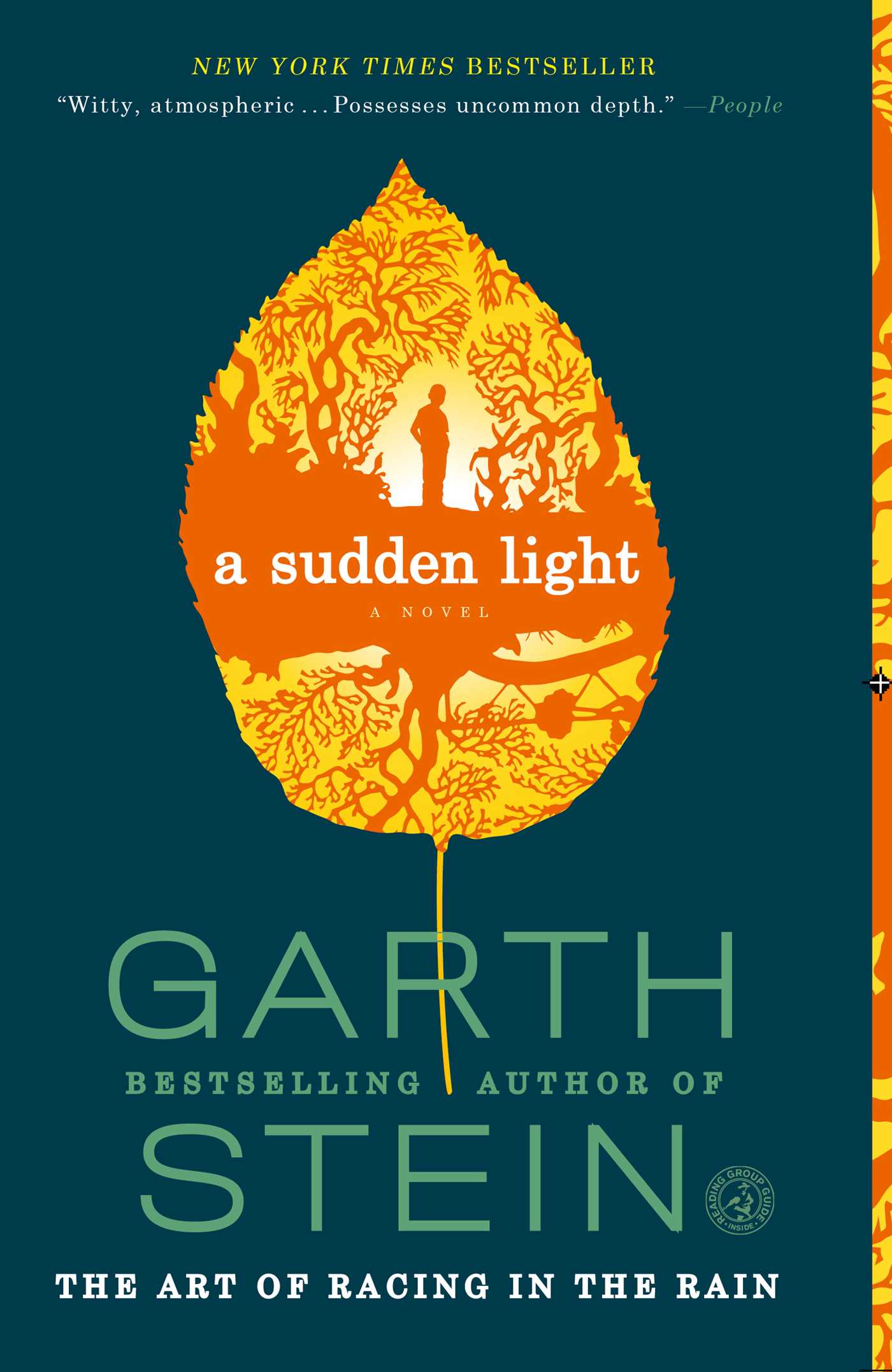
A Sudden Light
Fiction by Garth Stein

Sadly, this book did not necessitate minute-stealing for me. I was super looking forward to reading it because I loved his The Art of Racing in the Rain . I gave it a good long try because of that previous book, but in the end I skimmed. I think there are a few reasons it didn't resonate with me. First, it was not what I expected. It seemed to have all the elements I love: family secrets, generational angst, cool old house, learning about the history of an area, in this case Seattle. But mostly, it's a ghost story. Racing in the Rain had some fantastical elements (dog narrator, check), but this one is a straight up ghost story. It just didn't do it for me. Also, it reminded me of the "The Fall of the House of Usher." I was reading that classic Poe story with my students at the time I read this book and it just kind of felt like I was at school. I read to escape (hence reading in the doctor's waiting room) so again, no thanks. Maybe with a different set of expectations or at a different time, I would have like this book, but not now.

Christmas is in four days. Baking is done. Wrapping and stocking stuffers are all I have left to do, and then after Christmas I still have a glorious week of vacation from school. I plan to be an hour stealer during these coming days.

Saturday, November 26, 2016

For your Christmas shopping list

We decorated for Christmas yesterday. It's our first Christmas in this house and as the familiar decorations came out of the boxes, we looked around for new places to put our dearly loved Santas and Baby Jesuses and ugly kid art. Thanks to more space in the new house, I have more bookshelves and windowsills and wall space for our collections. I noticed, though, that most of my bookshelves are not actually taken up with...books. Not nearly as much as you might assume, anyway, given the ravenous readers that we all are. In fact, the kids probably have more books in total than the adults do, and most of what we own is from college. You know, the time in your life when you are REQUIRED to buy books. Most of the books I read now come from the public library and our own personal lending library, the network of friends and family that passes books around. We all constantly have books in our passenger seats and purses to give to someone. It's a great set up and one I for which I am thankful. I'm also aware that someone, somewhere, had to buy those books, so here are some suggestions for the book lovers that you're looking to buy for this Christmas. Fill up those shelves and pass them on.

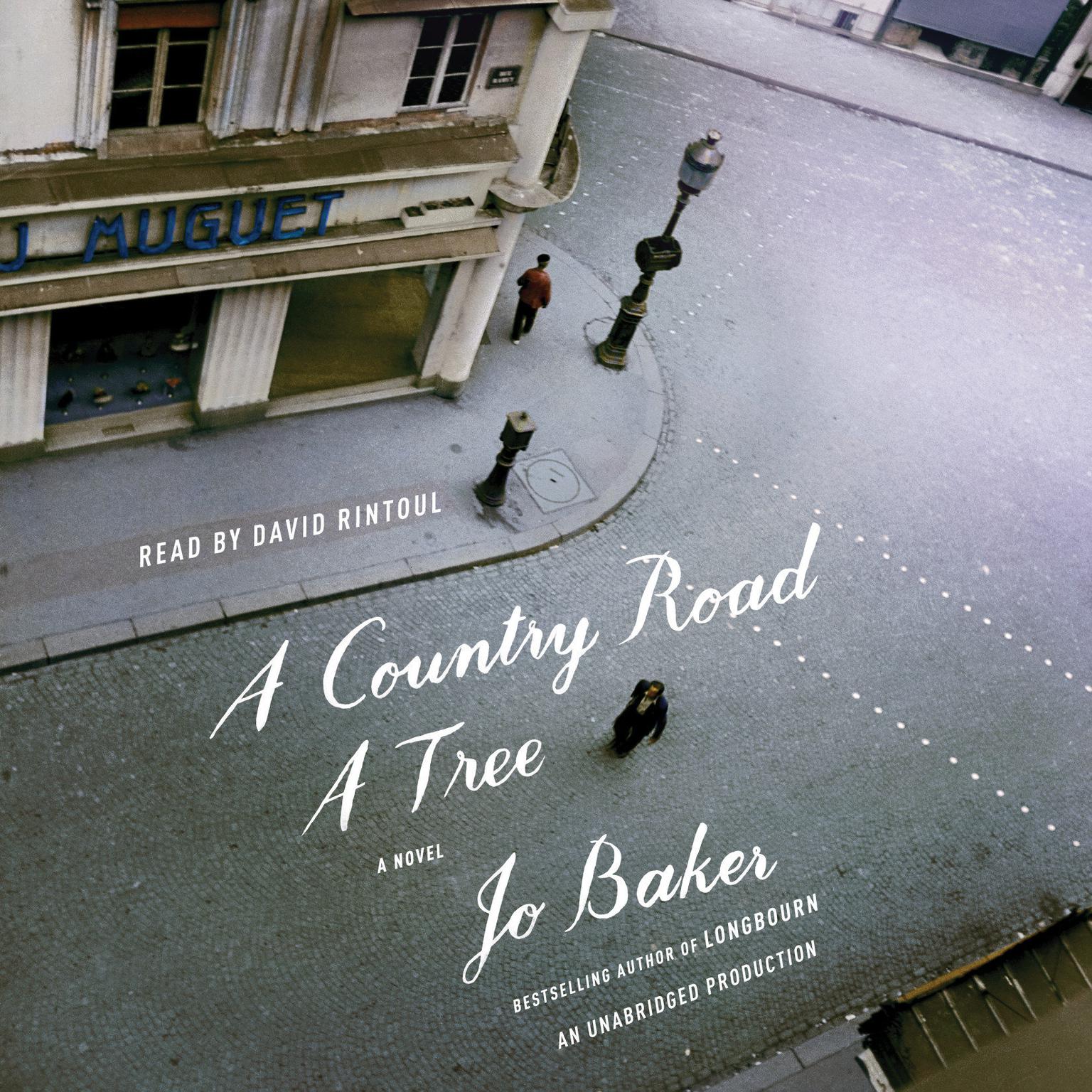
A Country Road, A Tree
Historical Fiction by Jo Baker

I give book talks to my students at school, and since I haven't read any young adult or middle grade fiction lately, I've been delving into my childhood favorites to read to them. Someone asked what I've been reading lately, though (teacher's pet :) and I told them about this book. I explained it as a historical fiction about an real life author (Samuel Beckett) who is from Ireland but lives in France during World War II and becomes a spy for the Resistance. Most of those things when right over their mannequin-challenge filled heads, but a few perked up at those topics. Truly, there are many topics in here to catch many people's interests, which is why I think it would be a good Christmas gift. I may buy it for my father-in-law. (Don't tell.) It starts slow, and I have to admit that I don't like Beckett's work, but I like the person I grew to know in this book. I like that I can see connections between his war experiences and his writing, in a deeper and more psychological way than straight autobiography. And mostly, I like that he saw a problem in the world and decided he couldn't not do something about it, even though it wasn't really his problem. That is so relevant, right now, to all of us.

Still Life and A Fatal Grace
Books 1 and 2 of the Inspector Gamache series
Mystery by Louise Penny

These books were recommended to me by three different people in the same month, and then hand delivered by one of them. You don't turn down such a gift, even when it isn't EXACTLY what you've been wanting. Mystery isn't usually my favorite. I would venture to say that these are more than mystery novels. The crime may be the plot driver but it is second to the depth of the characters and the subtle themes of humanity and life. The French Canadian detective is a master of studying humans, and in the village of Three Pines he meets the best array of fascinating, loving, disturbed characters you could ask for. That's another thing I teach my students: discover what kind of reader you are, whether you love characters or action or theme or facts, and you'll always have a good book to read. Lucky for us, this series has 14 books, so I'll always have a good book to read...for the next two months.

This is just what I've been reading lately and is a little limited in scope, so check out past posts for other must-reads. The two best book by my newest favorite author, a writer of deep and rich historical fiction, is here and a bunch of sweet fluff is here. Good luck shopping!

Wednesday, October 26, 2016

Literary Feasts

Does anyone else's family use the phrase "My eyes were bigger than my stomach"? This is when everything on the table or buffet looks too good to pass up and we load up our plates with more than we could possibly eat. This usually happens to me at Tuesday night dinner at Grandma's. Does she have to make such good bread, and that Greek Goddess dressing, and wait, there's dessert, too?

I've been doing this with books lately. For starters, I checked out too many literary looking books at the library near the end of the summer. What was I thinking, with a household move and going back to work, that I really needed to read about Russian literature and artists colonies? For my main course lately, I've been reading lots of young adult and middle grade fiction so I can ahead of or at least keep up with my students. And then I go and pilfer more books from my mom's shelf, just so no one else in the family gets them before me. And as tired as my kids (both biological kids and school kids) are making me, my reading eyes are definitely bigger than my reading hours right now.

Still, I've gotten through a few books I can share with you.

The Versions of Us
Fiction by Laura Barnett

This one took me too long. I think that's probably an indication that it's not one of my favorites, maybe not even a book I'd recommend. That was pretty disappointing, because it seemed like my perfect kind of book. I love stories told from multiple points of view, and this one is actually told from multiple versions of reality. A young man and woman meet in college in England in the late 1950's and either fall in love and get married, fall in love and don't get married, or don't fall in love. One couple, three stories. The author deeply develops the characters and deftly weaves together the three stories. It's very well written. However, I was always confused about which version of them I was reading. I also found all three stories of their relationship quite cynical. I think if I was, ahem, older, I may have found more to relate to in the time periods they live through and the ups and downs of the marriages. But it was too much down and not enough up for me, in all three versions. Someone needs a happy ending.

Some Kind of Courage
Middle Grade Fiction by Dan Gemeinhart

Even though the middle grade stuff is the main course in my books are food analogy...it's really the dessert. This sweet, easy, one day read made me feel good like a warm chocolate chip cookie. The author is local, a school librarian turned author, and in that, my hero. The story is an adolescent orphan in turn of the century, Wild West style Wenatchee, searching over mountain and up river for his stolen horse. His unrelenting friendship to all and bravery in dangerous circumstances and conviction of moral courage is heartening. It's a better break from the election news than a kitten picture on facebook. I loved sharing this with my students and I hope you can read it with a kid you know and better yet, buy it for a kid you know. Support local authors. I may be one someday.


The Summer Guest
Historical Fiction by Alison Anderson

I continue to dive into the literary pursuits of my over eager summer library splurge. The patient librarians continue to renew these books for me. And I continue to ask myself why these books just aren't as great as they promise to be? This one is again, all my favorite things: takes place mostly in another time and culture (Russia 1880's), told from multiple viewpoints (1880's Russian woman and two contemporary women), about literature and publishing...it should have been perfect. This particular story is about a blind woman's diary the summer her family hosted Anton Chekhov, the famous writer and playwright, and whether or not he wrote a mysterious, missing novel. Sounds lovely. There's one fatal flaw, though. It's about Russian literature. I forgot I don't like Russian literature. They have too many names, for one thing. For another, there's a certain starkness or stoicism to the culture that I don't understand. I should probably force myself to get through more of it and would grasp it better, but I'm not a college literature student anymore, so I don't have to. I think I will try ONE MORE of the scary literary books from the library before going back for more book candy, though. To keep myself in shape.

Sunday, September 4, 2016

But Where Will I Read? Part 2

We have moved. It is done. But...is it ever really done? The boxes are all unpacked and the furniture is all placed. I know where MOST of my belongings are and I can USUALLY find the right switch for the light I want to use. There is also, however, the never ending list of improvement projects that keep us busy and, let's be honest, I keep finding different ways of organizing. It's my spiritual gift.

In the midst of this process, I started teaching again, my sister had a baby, my cousin got married, and my kids went back to school and daycare. It's all been a very rich time, and filled my minutes and hours with exciting new experiences, and also a few three year old melt downs.

So I find myself, at the beginning of September, on a glorious almost-fall day, having planted my mums and swept my porch and sitting down without a favorite book to read or a favorite place to read it. I have not yet answered my question...where will I read?

I could read here..


Or here...

Or here...


But the routine still isn't there, the places don't feel right yet, and frankly I'm tired. So meanwhile I mostly read facebook and also these books to get me back in the brain of middle school girls again...

When I'm done with these, I hope to get back to my routine and joy of reading novels. I have this stack waiting for me. They haven't appealed to me much yet so I may take them back and start fresh. If you see one in here that you loved, please tell me and maybe I won't abandon it.


(By the way, if you came here looking for book recommendations, in July I really enjoyed A Man Called Ove by Fredrick Backman, I mostly enjoyed My Grandmother Asked Me To Tell You She's Sorry by the same author, and I devoured the new Harry Potter, which everyone will tell you is not the same because it is a script but I think a different Harry Potter is better than no Harry Potter at all. )

Sunday, July 3, 2016

But Where Will I Read?

Our family is moving. This is a really big deal. For eleven years, we've called this house home. We have brought all three of our babies from the hospital to this house; we have loved numerous pets here; we are on a first name basis not only with many neighbors, but also the neighborhood goats and donkey. So while we are excited for the opportunities in our new house, we are understandably a little sad about leaving.

Each of us is concerned about different aspects of the move. When she lets herself think about it, my daughter is devastated to be leaving her best friend across the street. My little boys are worried that they will have to leave their things behind. I've assured them that we'll take all their toys and furniture. "Even my nightstand?" "Yes, we're taking your nightstand." "Even my bookshelf?" "The bookshelf too." It has helped to read The Berenstain Bears' Moving Day and witness Brother Bear go through the same emotions. God bless Jan and Stan Berenstain for thinking of everything.

Then the moment came for me to have my own little freak out about moving. I've been concerned about the logistics: packing, cleaning, changing our mailing address with umpteen companies. Then, as I was packing books, of course, I found myself asking: WHERE WILL I READ? Will the light be right from the built-in bedside lamp? Will the brown leather recliner fit in the living room? Can I read on the back deck and still see the boys playing?WHAT HAVE WE DONE?

I didn't have a Berenstain Bear book to show me that it would be all right, but I did remind myself that all my books and favorite reading chairs are coming with us. I'm sure there will be an adjustment period, but there may be even better reading spots than here, in our happy little house. I will most likely enjoy future writing by favorite authors just as much. And thank goodness for that.

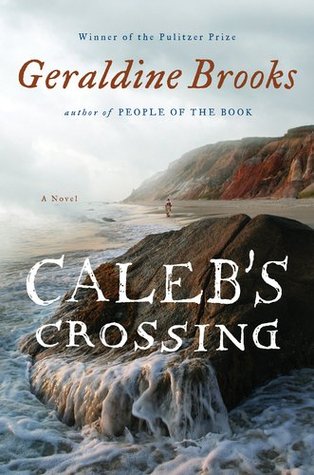
Caleb's Crossing
Historical Fiction by Geraldine Brooks

I dearly hope that Geraldine Brooks will write more books for me to enjoy in my new home. This is the last of her current books that I hadn't yet read. It isn't my favorite; People of the Book earns that place in my heart, but it is the favorite of a friend. Brooks' books are intricately researched and this is no exception. The blurbs say this is the story of the first Native American to attend Harvard in the 1700's, but I think it's the story of his friend, Bethia. The two meet on their home island of Martha's Vineyard, but their experiences of their home are vastly different. What they share is high intelligence, open hearts to learn from each other, and a curiosity about the world that leads them far from their home. I find them both a little too perfect, actually, as characters go, but I do love their relationship and their purity of heart. I expected a bit of a different ending, knowing Brooks writing and her take on women's roles, but I think that is a gift, too, to be surprised. I hope to read and enjoy many more of Brooks' novels. I wish even more to someday write as well as she does.

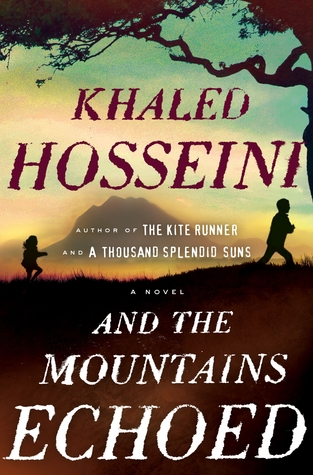
And the Mountains Echoed
Novel by Khaled Hosseini

From another time-tested author, Hosseini's third book is just as intricate, disturbing, and beautiful as his first two. I'm always a little reluctant to start his books because I don't know how deeply they will affect me, what nerve or emotion they will pierce with arrows of truth. That is his strength as a writer, that he may write of a different country and time but it becomes real and personal and connected to me nonetheless. This story is actually many stories by many characters, all connected to the one devastating separation of a brother and sister in Afghanistan. As a result, I felt a different piercing with each story, a different truth about mothers or friends or personal failings or unexpected beauty. It added up to a rich experience but was less jarring and unsettling for me than his other books. I'll share one small arrow of truth; a character who left Afghanistan for the U.S. as a young boy, visits his homeland as an adult, after the war, as a kind of humanitarian tourist. He meets a little girl in need of a surgery that his home hospital can perform and goes home intending to get her this surgery despite all cost. Little by little, though, he forgets how deeply he felt about her situation and eventually goes back to his complacent life without helping her at all. Who among us can't think of a time we felt to our core that we must help with something, someone, but then let the fervor slowly die without taking action? It's so easy to do when the situation isn't clearly in front of us all the time. I'm thankful for good stories and good writers that can show us these truths again and again. The little girl in India that my family prayed for every night at dinner, how quickly her face went out of our minds when I had to pack up her picture.

I'm looking forward to unpacking in my new home in a month, finding new spots to curl up with new books, but also putting back up on my fridge the picture of that little girl. Who knows what other stories that house will bring us into?

Saturday, May 14, 2016

Three books to take you away from it all

It's that time of year. Don't get me wrong; I love spring. But we're at the verge of spring becoming summer, when the number of activities for kids ramp up just about the time the kids are losing all motivation to even find their library books and cleats, let alone actually go to school and choir and t-ball and (heaven forbid) PE ON MONDAYS. These are the specifics in my house, but I know you have your own version of spring fever. Admit it. My recycling bin can't be the only one with too many chardonnay bottles clinking in the bottom. And to top it off, I am keenly aware right now that my complaints are only teeny tiny microscopic algae cell problems compared to some of the hardships facing some folks around the world, and some friends even closer to home.

We need an escape. Beach time is still too far away, but I've been enjoying some early beach reads anyway. Reading really is the best escape for me, especially these nice, relaxing, easy reads, where everyone ends up happy and no one has to breathe through rags because of dust storms (sorry, Tim Egan, I quit reading The Worst Hard Time. It was too much reality right now).

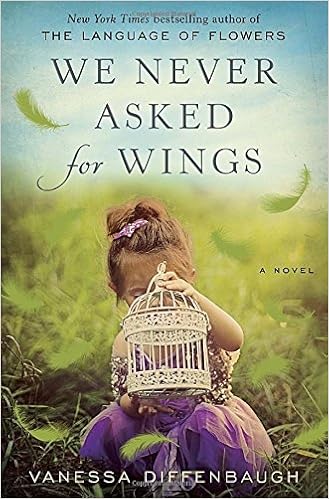
We Never Asked for Wings
Fiction by Vanessa Diffenbaugh

I saw this sitting on my sister in law's coffee table and immediately requested it from the library. Diffenbaugh's first novel, The Language of Flowers, was a surprise and a delight, so I was super excited about this. With such high expectations, it's no wonder I was a tiny bit disappointed. This story is similar to the first in the consistent use of theme and imagery (birds and feathers this time), the close look at how systems fail fragile populations (children of immigrants), and the faith the author demonstrates in individuals to do the right thing for friends or even strangers (a young mom, her new hipster boyfriend, and a teenage boy). I just never fell in love with any of the characters in this like I did in her first book. Diffenbaugh expresses in her comments at the end that this was a harder book to write, and as I'm working on my second manuscript, I understand, so I shouldn't be too critical. It's also a good story, a sweet story, that should probably be allowed to stand on its own.

By the way, this is one of those covers that does not match the book. I'm not sure the graphic designer even read it. Yikes.

Hello from the Gillespies
Fiction by Monica McInerney

I set very few expectations on this book, having never read this author and checking it out on the recommendation of a friend. If anything, I had the opposite experience as with Wings, being a little bored at first and then growing to care for the Gillespies. Maybe that's the author's exact intention. She starts with the mom of the family writing a Christmas letter full of bad news and honest evaluations of the family members' flaws. Not a great start for a character-driven reader. As they came together, though, and acted like a family instead of a group of selfish misfits, I loved them for their love for each other and misguided attempts to help each other through their domestic, romantic, financial, and hair problems. Plus, this book is pretty long, so it draws that mental escape out for a bit.

Actually, looking at this image, I realized that this cover doesn't exactly fit either. This is set in the Australian outback, and while there is a painted door with roses nearby featured in the story, I think these look a little too lush.

One Plus One
Fiction by Jojo Moyes

Ah, there's a cover that doesn't promise anything, except another Jojo Moyes book. Her covers are all pretty similar, which makes it handy for spotting them on the Book Club Favorites shelf at the library. Since I liked Me Before You and loved The Girl You Left Behind, this came with a pretty good guarantee, I think. And before you protest that those are not beach reads, this one is. It's a simple, road trip-unlikely couple-sweet troubled kids-one big drooling dog, kind of story. Happy ending, win win. The one thing that annoys me about Moyes is that it always seems to be the men who have the money to help the broke woman and the women who have the social skills to fix the emotionally stunted man. They do kind of save each other, but it seems like there should be a little more variety in who does what kind of saving. Maybe I'm just an idealist. And I am, I suppose, a writer, so I guess I should take that as a reminder to give my own characters a chance to break some gender roles.

So there you go, friends, mindless reading to get you through the rest of your school year/baseball season/finals studying/allergy season/whatever ails you. Love to you.


Wednesday, April 20, 2016

Author Study #2: Geraldine Brooks

When I've done something that I feel particularly proud of, but in an embarrassing sort of way, I fall into Bridget Jones Diary speak: Have accomplished great thing. Will be remembered forever. Suspect am something of a genius.

Which is ridiculous, but that's the point. I am not a genius, for simply reading two wonderful books in a row. In fact, I'm the lucky beneficiary of Geraldine Brooks' genius. This is truly an author to study and emulate.

From the (actually three) books I've read, it is apparent that Brooks has some personal themes she prefers to write on, and that she is a stunningly detailed researcher. Still, her books are more different than they are similar. The first one I read, The Secret Chord, demonstrated her aptitude for deep characterization, the long arc of a family narrative, and careful research about one point in history. Since then, I've seen her investigate not two, but six other time periods, and tell stories from a dizzying number of perspectives and voices. No wonder she won the Pulitzer. (Also, she was in college when I was born. So, I've got time.)

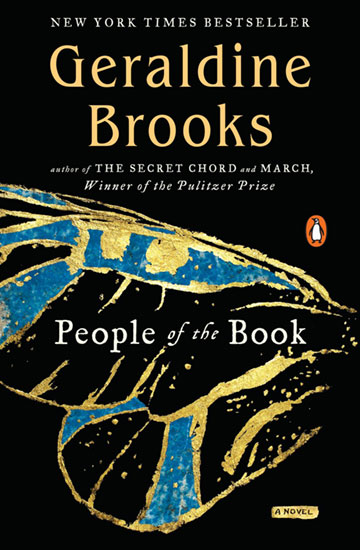
People of the Book (2008)
Historical Fiction

Reading a review of this book on Goodreads is what piqued my interest in Brooks to begin with. A book about a book, and all the people who were involved in its making and survival through the centuries? Yes please. Hanna, an Australian conservator of ancient manuscripts is called to consult on a famous haggadah, a Jewish book of Passover, when it emerges from the rubble of war in Sarajevo in the 1990s. The book and its rescue, by the way, is real, but the rest of the story is the fiction part. Using tiny artifacts from within its binding, she traces the journey of the book through that war, World War II, Vienna in 1890s, Venice during the Inquisition, Spain and Africa in the time of Columbus. While Hanna has an amazing knowledge of these varied times and places, and learns a great deal about the book through her investigation, the people of the book appear to tell us their own stories, giving the reader more details than Hanna could possibly know. The way the book traveled between the people it touched is often left a tantalizing mystery, though, to us and to Hannah.

One difference I noted in the writing of these three books is that this is the only one with multiple points of view and I think the characterization suffers a little for it. Perhaps it is harder for her to get into the mind of the characters as she switches back and forth, but they take a few pages to find their voice. It's a sacrifice that is worth making, though, to tell this story and immerse us so richly in the surroundings of the characters, as only that manner of story telling could do.

From this book as well as The Secret Chord, it's obvious that Jewish history is important to Brooks. She seems to endow the Jewish characters, the biblical and the historical and the fictional, with the most admirable and honorable qualities. However, she also gives them vices, and presents some honorable Christians and Muslims, despite the atrocities that most of the different religions commit against each other through the ages. That is a lasting impression, the ageless ability of humans to devalue each other, which is apparent in TSC and the next book I read as well.


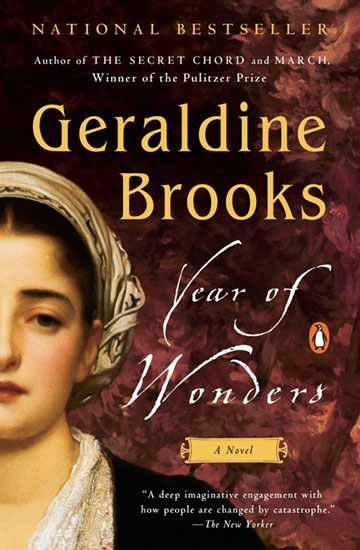
Year of Wonders (2002)
Historical Fiction

This one is only set in one time period. I know, so lazy of her. This one time and place, though, is fascinating and repulsive and wondrous enough. Just as the haggadah is a real book in The People of the Book, the year 1668 and the village of Eyam in England really existed, and really did fall victim to a horrifying plague. The wonder, though, is that the village decided to close its borders so as to protect their neighbors from the plague. You can imagine the microcosm of humanity that occurred in that year and that place, from the very best of people to the very worst, including murder, witchcraft, love, learning, innocence, forgiveness, revenge, greed, and so many more facets of our intricate natures.

The narrator, Anna, is complicated and wonderful all on her own. A miner's widow who supports herself as a servant to the vicar and his wife, she learns from them as well as from the town herbalist. She is at times loyal, jealous, generous, courageous, and selfish, as we all are. The personal journey that Anna takes in one year, all while staying in the confining borders of her own tiny village, is the wonder of the book. And just as you think you know what the culmination of her journey will be, she surprises us again. This is the depth of character I expected after reading TSC and felt was missing in POTB. Perhaps it's because she had only one time period to study (and study she did, in amazingly specific detail), and only one cadence of speech to enter, and only one delicate psyche to enter into, that Brooks was able to develop a character of such depth.

Her Jewish theme was left behind in this one, but the glimpse of humanity's worst tendencies was present, tempered by slightly more emphasis on our saving graces. Anna points out in one instance that neighbors are more likely to help those they know than to help strangers, and possibly this is the main point of all Brooks' stories, that of extravagant grace for those we love and even more extravagant love required to save a stranger from the violence inherent in all of us.

By the way, I've advocated lately for quitting books that you're not engrossed in. Life is too short to read bad books. But I've been told that I quit one of Brooks' books, March, too quickly.  So after I finish the stack on my bedside table, I'll try it again.

Here's the stack. (I'm rich. Mwahahaha.)


Monday, April 4, 2016

Author Study #1 Plus some other stuff

In a library check out spree long long ago, I set out to read several books by the same authors. I had it on high authority that Timothy Egan is a great historian and worth my time, with at least two of his books being must reads. So I found those two plus his debut novel. At the same time, I found two books by Geraldine Brooks, whose newest novel I really enjoyed, but her fan fiction of the March family in Little Women left me utterly bored. 

I wondered, as I looked at my armloads of library books (which are now severely overdue, sorry NCRL), how would these authors stack up against, not each other, but themselves? What made me love The Secret Chord but hate March? Would I like Egan's nonfiction as much as fiction, since it's by the same guy, even though fiction is my first love? In other words, it was time for the ultimate literature teacher geek out: an author study.

I can now tell you, like with most things in my life right, my intentions were purer than the result. I am less than half way done, and I've detoured in the middle. 

First, the Egan. I read The Winemaker's Daughter  what now seems like eons ago. It's his debut novel after writing prize winning journalism. I love that it's set, like most of his work, in the Pacific Northwest. I could picture each bend in the road as the main character, a thirty something single woman with a vague career as an architectural consultant, travels back and forth between Seattle and her family's vineyard in north central Washington (ie Chelan). She also travels to Italy and Montana, which presents the stretch of my imagination I crave as well. I found the plot to be a little meandering; though there are several climactic moments, deaths even, they get lost in the well researched but overly detailed prose about the geographies of both regions and the concepts of wine making, sociological preservation, forestry and wildfires, salmon fishing, and of course, familial obligation. It's a rich and nuanced book, though it took me too long to finish because I wasn't enthralled. I was interested to see how it compared to Egan's nonfiction.


I started with The Big Burn, even though The Worst Hard
Time
 was higher recommended, because it also happens to be the Columbia River Reads book for this spring. It feels kind of fancy to be reading the same book as all the smart people at the library. Last time I read one of these, it was The Boys in the Boat and I felt pretty smart for reading it. I don't know why. I've heard that some people don't like reading on e-readers because others can't see what smart books they're reading. I would be that person, if I liked e-readers. However, I was not smart enough to enjoy this book. It was a slog. Egan used the same level of detail and intricacy to paint an elaborate picture of the lead up and fall out from a huge wildfire that burned parts of three states in 1910. About a third of the way through, I was still learning about Teddy Roosevelt's favorite sports, as a set up to his development of the National Forest Service, and therefore fire fighting, and so on. The part about the actual fire was more interesting to me, probably because it was more narrative, but still overly explained. I felt relieved at the end, though confused to not hear more about how this fire affected fire fighting policy today. I thought that's why Wenatchee was so interested in this particular story. 

As far as author study, I found that the parts I enjoyed least about Egan's fiction carried over into his non-fiction. He is a master of research and brings so many elements into his story, but I think it's too much for me, a character-driven reader. I still plan to read The Worst Hard Time but I needed an Egan break. I was watching too much TV because I was unmotivated to read. 

Thinking that I'd start with the Brooks, I was instead derailed by a recommendation by my nephew. There is just something exciting about reading the same books as the younger generation in my family. Whenever they want to share a book with me, I am eager to find out what they see in it and get to know them a little better through it. So instead of Brooks, I read the young adult book This is Where it Ends. I actual read with some nervousness because this is exactly not my type of book. Children die. It's about a school shooting, told from the point of view of four main characters and several social media accounts. In that way, and in the problems and personalities of the characters, it is clearly directed at a modern generation of young adults. The kids struggle with weighty things like abuse, sexuality, and family health problems, as well as with the more expected problems like grades, crushes, and college decisions. This layering of issues is very real for our kids and books like this make me long to be a support for the kids in my life. It's also obvious how this book appeals to the young adults reading it. One line at the end has a character wondering if we can every really know another person, even in a crisis situation like a shooting. I think it's at the heart of the issue, in the book and in kids--the need to be known. 

So I read Egan's books in over a month and Nijkamp in just a few days. We'll see how long it takes me with the two Brooks novels I want to read before I post again. Meanwhile, maybe I'll have some more of my own novel to share. And if you didn't catch the last post, the second excerpt of my manuscript, scroll on down. 


Friday, April 1, 2016

Novel Excerpt #2

August 1952

She bent to close the low windows in the sitting room as the wind picked up, pushing aside white curtains worn thin and soft from washing. The parching daytime heat of late summer was giving way to an evening storm. Hopefully the rain would be light; they didn’t need any damage to the fruit, nearly ripe on the trees.
William coughed in the boys’ room down the hall. He’d caught a cold and was having trouble shaking it. She was trying to keep him inside during the preparations for harvest so he didn’t get worse. Small luck of that, she sighed. The five-year-old’s adventurous spirit would be the death of her. Last month he’d tumbled off his uncle’s tractor; thank God he hadn’t been crushed under the wheels. When he was only three he’d fallen asleep in the barn behind a row of apple bins and they hadn’t found him until long after dinner hour. She loved every hair on his blond little head, but she didn’t know how much more she could take.
And now this. This new worry, pressing on her from the inside out.
As she went about the evening chores, her thoughts circled around like a dog chasing its tail. She washed, dried, and put away the dinner dishes and thought about it. She swept the wide planked wood floors of the back hall and tidied the pile of shoes and thought about it. Checking on each of her children in their beds, she couldn’t help but think about it.
She pulled the thin summer coverlet over James and Michael, who at eight and twelve still slept as actively as they had at Willy’s age, throwing the quilts back in their boyish dreams of running and climbing. It was early in the evening for them to be asleep, but they’d had a long hard day of helping in the orchard. It sometimes seemed too much to ask of them, especially since school had started before Labor Day this year; going to school on weekdays like boys and working in the orchard on weekends like men had to be hard, but it couldn’t be helped. Willy was curled up in his cot on the floor, nestled in a circle of sheets and blankets like a puppy. One door down, Mary was sleeping on her side in the big bed with her hands folded under her cheek, looked like an angel compared to her big brothers. She’d outgrown her crib, but didn’t have a bed of her own to sleep in yet. It worked right now for her to sleep in their bed but when John returned they’d all have to shuffle around again.
And the dog in her mind continued his ceaseless circling, coming back around again to her one big worry, constant and palpable.
Finally at leisure to sit in the front room, she reached over and turned on a lamp. Night fell quickly in the upper valley. She tore a sheet of paper out of James’s school notebook and leaned over the small table next to her chair.
What to say? How to write him? Her face, so carefully composed and even a little hard during the day, had begun to crack in places. The exhaustion, the worry, the loneliness began to show in the droop of her eyes and the lines around her mouth. She wanted to do right by her family, but it was becoming harder and harder to know what that was. When she was a little girl, it had been easy to know what was right. She would watch her mother and father work hard in their orchard, attend Meeting on Wednesdays and Sundays, share with neighbors and Friends what little they had during Depression years. Things were scarce but sureness, of faith and family and simple living, abounded. Even as her parents followed the Friends way of letting her learn about their faith through observation, depending on God’s guidance rather than their instruction, she’d found her way. She’d chosen a spouse from in Meeting, stood up to proclaim their vows together, felt the Spirit of the Lord move within her.
Now, though, the Spirit had been silent at Meeting for so long. She still believed that God was within her, as in every person, but He was hard to feel. Other emotions had taken over, more desperate and immediate and demanding. She tried so hard to practice peace and love to those around her. Life just wouldn’t be peaceful to her in return. The blank paper in front her was an unknowable future, shadowed by storm clouds at the window and her own doubts.

“Dear John,” she began.

Friday, March 4, 2016

Prologue: March 2013

I have something new today. Two somethings, actually. First, I want to try discussing a few books at once by the same author. I enjoy reflecting on how a writer's works are similar or not what I expected, but I often wonder if I remember correctly. I read too fast, and too lazily, to remember everything. So I'm reading two, or maybe three, books by the same author back to back and am going to wait to post about them until I've read them all. First up will be two books by Timothy Egan, The Winemaker's Daughter and The Big Burn (and if I can get it in time, The Worst Hard Time). I'm done with one and started the second, but it's a grown up book, so it may be a while.

Meanwhile, thing number two. I have a brave friend who is posting his some of his novel, chapter by chapter, on his blog. This is very very brave. I have been honored by a group of readers of my manuscripts, but to put it out there, where anyone who cares to find it can read it, is again, very very brave. Together, we can do hard things, according to blogger Glennon Doyle Melton (and also Jesus) so I will be brave too. Here is the prologue of my second manuscript. More to come, until I finish the Egan.


March 2013


Avery stared at the photograph. It had jumped out at her, almost biting her, as soon as her fingers found the worn wooden frame deep in the desk drawer. That it was framed at all, for one thing. That it was old, for another.
The scant other pictures Avery had found in the desk were scattered loose in the drawers and featured recent people and places in her mother’s life. The artist colony in Long Beach. Someone playing guitar by a fountain. A hand raised in the air with sunlight streaming between the fingers. They were transient images, not just because the moment they captured was carefree and fleeting, but as if the people themselves weren’t destined to stay long on the paper and would dance away at any time.
This picture, with its five solid figures, so classically arranged in an inverted V, had a sense of permanence that the others didn’t have. Their somber faces and mid-century Sunday best clothes, the gnarled old trees and low-slung front porch in the background, spoke of a past and a future. It was the furthest thing from what Avery associated with her mother.
Cold, damp air seeped in through the old loose windows, accompanied by the sound of cars sloshing through puddles. Portland in March, perfect weather by which to pack your dead mother’s things and punish yourself.  The Goodwill pick-up van was coming in four hours. Charlie had sparse furniture and kept few personal belongings, but she had left it all in such random order that it was taking Avery forever to sort and pack. Charlie would have found humor in that, her neglect forcing her daughter to make all her final decisions for her. It could not be over and done with soon enough. The four drawer wooden desk, smoothed on top by use but splintered underneath; the orange sling back chair; frameless double bed, potted plants, mismatched furniture. From thrift sores it came and to thrift stores it would all return.
Avery set the frame upright on the floor by the bottom desk drawer it had come from, and sat back on her heels. The strangeness of the photo was riveting, distracting her from her task. Both the photograph and the packing refused to be ignored. Her eyes darted back and forth from picture to packing. The woman standing stiffly in the center of the pose; a pile of random sketches bound for the throw-away box. Four children clustered around the central figure; car insurance papers peeking out of the take-home file. A grove of trees behind and to the left of the group; books on seabirds stacked on the desk chair. The scene became its own still life. Charlie would have appreciated that, too.

Avery put the picture in the take-home pile and moved on. That was something she could most definitely do, thanks to her mother: move on. But she would take the picture home and consider it. It may not even have belonged to Charlie—she could have bought it at a thrift store, inspiration for a new art piece. Lodged in her chest, though, was an unusual sense of sureness: it was Charlie’s. Years later, when the picture was matted and framed on the wall of her home, she would remember that decision with a sense of gratitude and a little bewilderment. Because the Avery of the Oregon years was not a woman of deep conviction.

Wednesday, February 17, 2016

On Sequels

Does anyone else agree that sequels are NEVER as good as the original? I know this is kind of a truism, a thing most people think, but it seems like it can't be completely true. There must somewhere be a book or movie that surpasses the one before. 

Not for me. Not ever. And here's why. One thing I love about a book (or movie) is the very newness of it. Even for authors I read extensively, each stand alone story has the promise of new characters, new places, lovely new phrases and patterns of ideas. It's a romance between me and the story, full of tingles and possibilities. 

This isn't to say I don't sometimes love the sequels. I mean, Harry Potter? I ripped the seventh book in half because my husband wasn't reading it fast enough to give to me. Yes, I can and do devour some series, all the way through. It's just that the dewiness is gone, the exhilaration of finding something amazing and feeling like I won the reader lottery. The second (or seventh) just can never be as perfectly wonderful as the first. 

Now, please don't read into this too much. I don't love my first child more than my second or third, and I'm not looking to be set up with any first dates, thank you very much. This is a book thing, and somewhat contrary to my small comfort-zone, routine-loving nature (I married a man I'd known since we were eight years old). Just a book thing. 


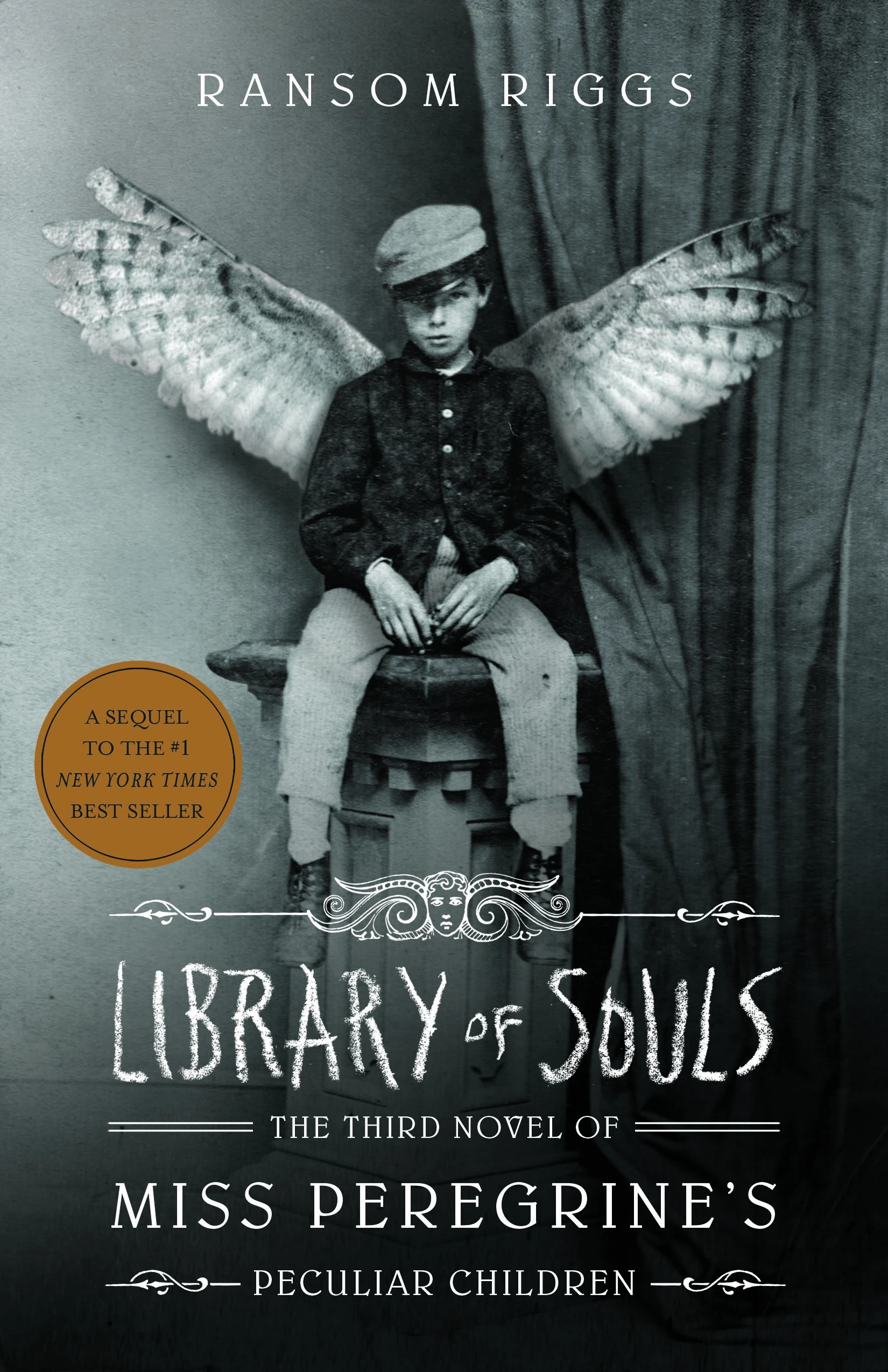
The books that bring all this to mind, by the way, are the second and third in the Peculiar Children series. I first loved them here and was delighted that they pick up right where the first, and then second, leave off. It's a quick trip through the time loops to a pleasant ending for all, with lots more peculiarity along the way. Enjoy. Just don't expect me to rave like I did for the first one. 


Tuesday, February 9, 2016

The Lake House

The Lake House
Novel by Kate Morton

I made a very important phone call this week. One that's been on my to do list since October. (Really. Written in green marker on my white board.) As you can see, it's also kind of a scary phone call, or I wouldn't have put it off so long. I called a church. Not just any church-- a Friends church. You might know it better as a Quaker church, but the sign outside says the Entiat Friends Church.

No, I'm not changing my religion. But I am very interested in the Friends church, and this branch in particular, because I'd like to feature them in my new manuscript. I should really be more judicious with that word "new," because actually I've been working at super slow speed on this thing for over a year, and I'm only 50 pages in. I'm also a bit stuck, waffling between some big ideas and sort of getting to know my characters still. So meanwhile, I'm going to do something big and brave, and visit the Friends church, as well as interview their pastor.

With all that on my mind, it may not surprise you that I read this novel with my writer eyes more than my reader eyes. I really love Kate Morton. Her Anglophile settings and happy ending mysteries are comfortable for me. I think I've modeled my writing after hers in some ways. The Lake House is her newest and I was at the very beginning disappointed in the title; it seemed so unoriginal. And, as I read on, so did the rest of the book. The dual time frames of 1930's and early 2000's, the disenchanted young women in both eras, the case of a missing or unidentified child. These are all hallmarks of her writing and while I really enjoyed the story, it was all terribly familiar. Possibly that's another reason why I could examine the writing at the same time. I didn't have to pay too much attention to know what was going to happen. Morton is very skillful in how she weaves her two stories together, revealing just enough in one time frame to cast suspicion, and then prove the innocence, of a character in the other time, until eventually all is revealed. I like her timing and can learn from it. The ending, though, was predictable and even TOO happy for me, which I didn't think was possible. It was too neatly tied up. The description of scenery ran on and didn't evoke character as much as it could. The characters themselves seemed a little flat and predictable. I liked reading this, don't get me wrong, and will read her again, but I wasn't overawed. Instead I was invigorated. I came away with the sense that I no longer want to write just like Morton. I want to write like me.


Wednesday, January 27, 2016

Thank God for books

Three out of five people are sick in my house, with one recovered already and one soon to bite the dust. There are used Kleenex, bottles of Clorox wipes, and various cold remedies and essential oils everywhere. My to-do list is growing in reverse proportion to my will to move. I did rouse myself this afternoon and wipe all the surfaces, fold some of the mountain of laundry, and vacuum up the daggers of dried up Playdough. But now all I want to do is read myself to sleep with Vicks on my chest.

Thank God for books, and for the North Central Regional Library mailing system. If you've read here before, you know my love for them. When I made myself to go to the mailbox today (it's halfway down the street, don't judge), I found three fat purple envelopes crowding my box. Sorry, postal worker, but man, was I excited, especially because it was the sequels for today's blog books, and because I have a date with my bed, probably for the next four days. 

Miss Peregrine's Home for Peculiar Children
Young Adult Novel by Ransom Riggs

This book was the beginning of my sick reading spree. January seems to be a bad month for my family, as this is the second year of multiple illnesses in a row. Two weeks ago, one of the current sickies was sick for the first time and I was stuck at home, much as I am now (but this time I'm sniffly and don't really mind). All that extra time, plus the fact that this is an easy read, plus its extreme goodness, led me to read this whole book in a DAY. Gobble gobble. 

One thing I loved about this is it's exactly what it seems to be. Creepy, yes. Childlike, yes. Captivating, yes. A teenager loses his grandpa in a mysterious way and sets out for the remote British island that his grandpa described in childhood stories. There he finds exactly what he's looking for--an orphanage of sorts where his grandpa lived. But how he finds it is, well, peculiar. And why grandpa left, and what the grandson will do with his new knowledge, is the rest of the story. 

You might be wondering if I'll let my daughter read this series, since we've enjoyed reading the same books lately. Not yet. The language is too adult, as is some of the psychology. I don't think it will be long, though, and meanwhile I get to devour the next two in the series.

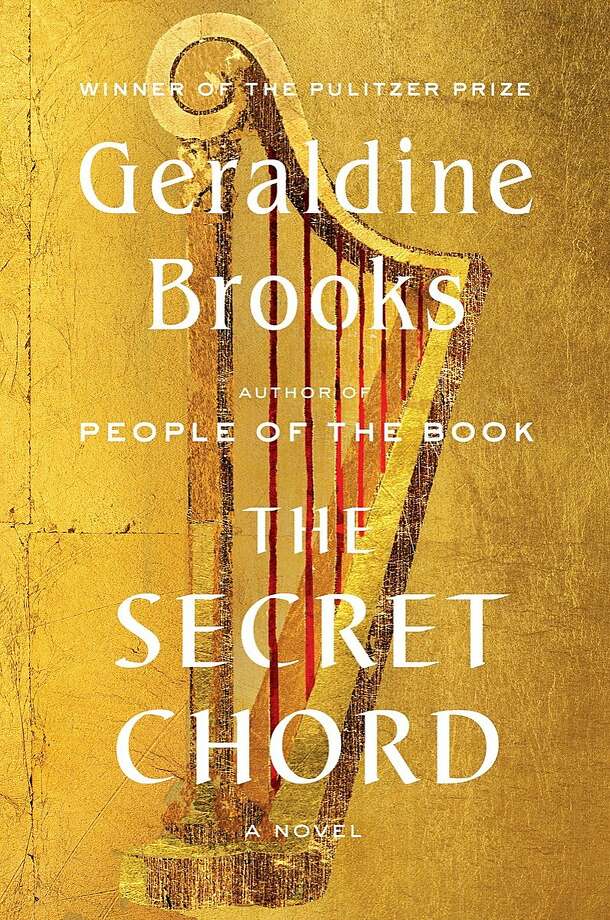
The Secret Chord 
Historical Fiction by Geraldine Brooks

You might consider this the opposite of Miss Peregrine. It took me two weeks to read and was not easy, in vocabulary or content. I actually quit a book by this author a while ago, but she was coming to read from this one at our library, so I was intrigued. I finished just in time for the reading (it's happening right now) but I was not going to inflict my germs on the general population, so I missed it. I'm glad I didn't miss this book, though. 

I was surprised to see that this is the story of King David of the Bible. It's definitely more of a literary and historical David than a biblical representation. I reread some of my Old Testament trying to remember the Bible's version, and also to figure out who was who (Brooks using more historical interpretations of the names, like Shlomo for Solomon, David's son). I still couldn't tell you if it's accurate to the Bible in events, but it is ever so much deeper in relationships, descriptions, and characterization. It's even too graphic at some times, in the battle scenes and the horrible things David's sons do to each other. Much like The Red Tent brings to life biblical characters, this one makes David even more human. He is a man after God's own heart but incredibly flawed at the same time. That idea followed me throughout the book, how God could love each human, and indeed the human species, through some of the devastating choices we make, both in ancient times and now. It was kind of a backwards way to realize that as messed up as our world is, and was in David's time, God loves us anyway. 

See? Opposite of Miss Peregrine, in time and contemplation and content and audience. But still, both were such a relief to read in times of sickness. And I have more to come. Thank God for books.